The Short Answer
AI citations are driven more by what the engine retrieves (including query rewrites) and by the model’s existing brand knowledge than by typical “AI SEO” page markup. In replay tests, retrieval explains far more variation than page properties.
So what: prioritize content that matches the meanings of the engine’s internal queries so you’re actually retrieved and can rank in its results, and account for how models prefer brands they already know.
Caveat: citation behavior varies by engine and market (e.g., engines differ sharply in whether they cite links), so optimize for retrieval dynamics rather than assuming one universal GEO checklist will work.
On this page
- Introduction: the new citation battleground is inside the model
- Why This Matters: GEO advice is often targeting the wrong bottleneck
- What the researchers actually measured (and why it changes the conclusions)
- How page content helps—mainly by matching the engine’s meaning queries
- Page features explain surprisingly little—retrieval explains much more
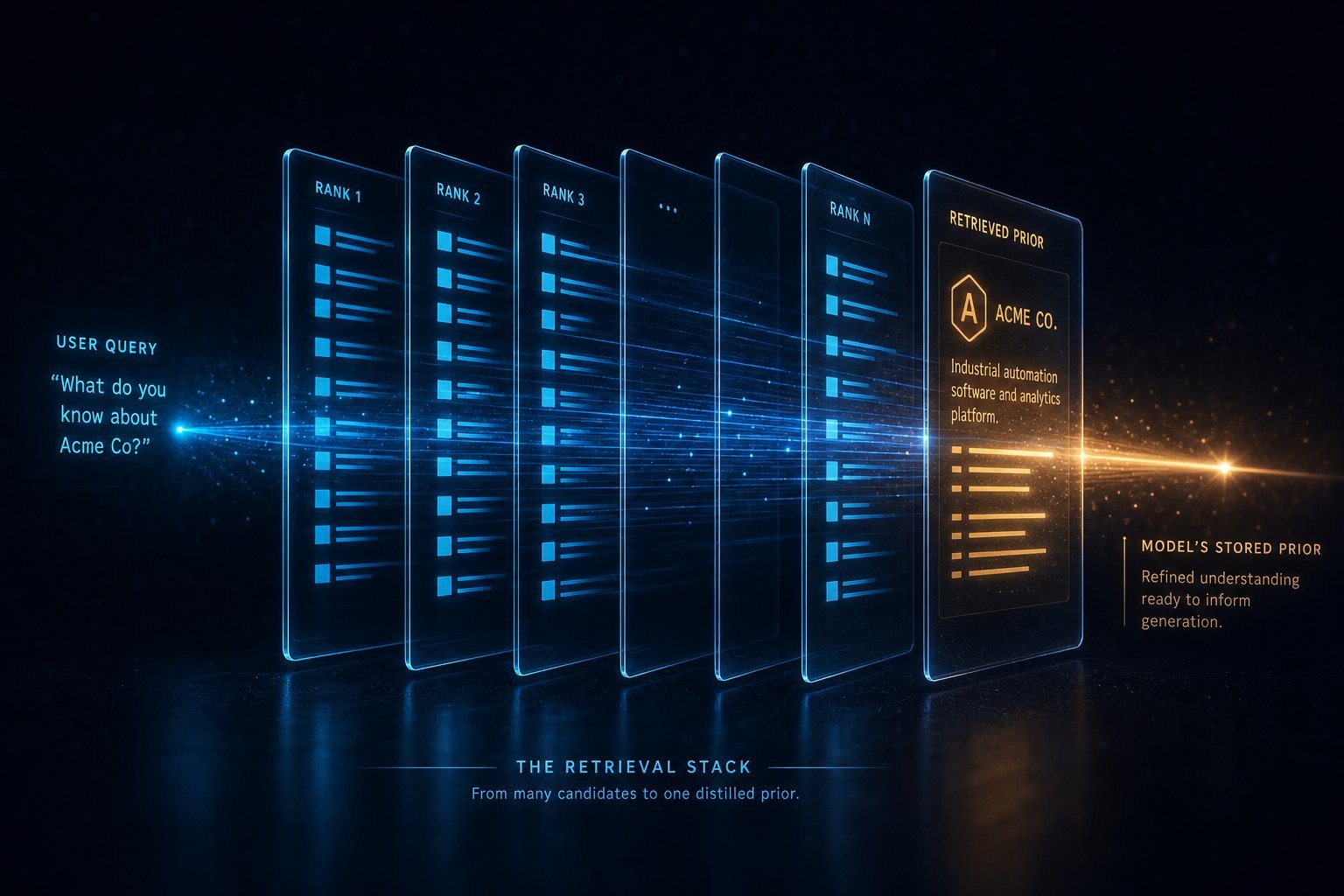
- Retrieval: the citation decision mostly happens before the model writes the answer
- The model’s own memory of brands can reorder everything (even without evidence pages)
- A quick comparison of what GEO can and can’t control
- Key Takeaways
AI Citations Aren’t “SEO”: They’re Driven by Retrieval + Model Memory (New Study)
Introduction: the new citation battleground is inside the model
Generative search engines like ChatGPT, Gemini, and Perplexity don’t just answer questions—they also attach a handful of links as “sources.” For publishers, those links are everything: they’re often the user’s starting point on the open web. A new research study digs into what actually determines those citations—and it points to something most “AI SEO” playbooks ignore: retrieval and model knowledge (not just page formatting).
This post is based on new research from the original paper, which analyzes 90 days of answers to commercial questions in two very different markets. Across 158,099 answers and 468,037 citations, the study tests common advice from the generative engine optimization (GEO) industry—and then “replays” the questions through the engines’ APIs to observe the hidden steps that the final answers don’t reveal.
The punchline? What a model searches for (its rewritten queries), what it retrieves (its own ranked list), and what it already remembers about brands together explain far more than typical on-page “AI visibility” tricks. Content matters—but mainly because it helps pages match the model’s meaning-level queries at retrieval time.
Why This Matters: GEO advice is often targeting the wrong bottleneck
Right now, publishers are spending time and budget to add FAQ blocks, schema markup, author boxes, and summary sections—the usual GEO checklist. But if citations are decided earlier than the part those tweaks touch, then you can optimize the wrong layer and still see disappointing results.
This is significant because generative engines are rapidly becoming a gatekeeper for discovery. If your citation depends on what the engine retrieves and what the model already believes, then “better page structure” won’t reliably move you—especially if the engine doesn’t retrieve you in the first place.
A concrete scenario you can apply today: imagine you publish a product page for a fiber internet provider or a niche B2B software vendor. You add a clean FAQ, structured data, and a “quick answers” section expecting better AI citations. But if the engine’s internal search rewrites the question in a way that doesn’t retrieve your page (or retrieves it but ranks you too low), the citations won’t follow. The study shows that rank inside the engine’s own retrieval dominates.
This research also builds on earlier AI citation audits that found problems with factual support and source biases—but those studies typically observed only the final answer and cited links. Here, the authors go deeper: they separate the “search/retrieval” step from the “answer/citation selection” step by replaying questions through the engines’ APIs. That’s the difference between guessing and measuring what actually drives citations.
What the researchers actually measured (and why it changes the conclusions)
The study uses two datasets collected daily for 90 days, from 24 June to 21 September 2026 (with careful comparisons across overlapping dates across engines).
Two markets, two citation ecosystems
The authors analyzed daily answers to commercial questions in two markets:
- Consumer market (large brands dominate):
- 651 questions
- 143,249 answers
- 396,188 citations
- Pages across 7,234 websites
- Niche B2B market (many small vendors):
- 55 queries
- 14,850 answers
- 71,849 citations
- 3,895 websites
They used three engines in the main dataset: ChatGPT, Gemini, and Perplexity. Notably, citation behavior differs a lot by engine (for example, Perplexity cites nothing in 96% of its answers in the consumer dataset).
The “within-website” design: hold the site constant
A big risk in observational SEO studies is that popular websites tend to get more citations for many reasons unrelated to any specific formatting trick. To address this, the authors compare pages only within the same website, so they can test which page-level properties correlate with more citations without confounding by overall site authority popularity.
Then they go one step further: they estimate effects with robustness checks and require features to pass five separate tests before calling them “real.”
The hidden step: API replay makes retrieval observable
Here’s the most important method shift. The paper uses an API replay method to run the same questions through the engines with web search enabled and logs:
- the engine’s rewritten queries
- the ranked list of retrieved pages (or equivalent grounding metadata)
- which retrieved pages are ultimately cited
That lets them measure the chain:
question → rewritten sub-queries → retrieval + ranking → citation selection
And that’s exactly where GEO strategies often assume the decision is mostly “page-level formatting.”
How page content helps—mainly by matching the engine’s meaning queries
A lot of GEO advice focuses on page-level improvements (“add FAQ blocks,” “use schema.org,” “include summary boxes,” etc.). The study tests those recommendations, but also tests something more basic: does the page actually match the question’s wording and meaning?
Only “match the question” properties consistently predict citations
When comparing pages within the same website, the only properties that reliably associate with higher citations are content-matching features:
- Title match (how similar the page title is to the question)
- Best-paragraph match (how similar the best paragraph is to the question)
- Word overlap (Jaccard similarity across content words)
Quantitatively, in the consumer market within the same website:
- One standard deviation better best-paragraph match is associated with 15.5% more citations
- Title match with 14.1% more citations
- Word overlap with 9.1% more citations
Across third-party pages (pages on websites outside the provider’s own domain), those effects get even stronger (for example, best-paragraph match around 25.7% on one side of the analysis).
Why the “AI visibility” markup tricks don’t hold up within websites
In contrast, the commonly recommended practices—FAQ blocks, schema markup, summary boxes, author boxes, and page speed—show a big difference between:
- Across websites (where they appear helpful)
- Within websites (where they mostly don’t)
The study shows a classic “looks good across the internet” problem:
- Across websites, these practices appear to correlate with more citations (e.g., FAQ blocks +18.1%; summary boxes +20.9%)
- But within the same website, these effects largely vanish (many coefficients are not significant)
The authors explain why: GEO practices tend to be implemented on the already-successful websites/pages. Across websites, you’re accidentally measuring “this website tends to rank/cite more,” not “this feature caused more citations.”
So the practical takeaway is blunt: if you’re only adding GEO markup without changing how the page answers the exact question in plain language, it may not move citations.
A useful analogy: your page has to be the “answer” the searcher is looking for
Think of the engine’s process like a librarian pulling books from a huge shelf:
- GEO markup is like changing the book’s cover design and index headings.
- Title/paragraph matching is like writing the exact explanation the librarian is asked to find.
The study suggests citations respond more to the “did it find the right book for the exact query meaning?” part than to “does it have the right formatting extras?”
Page features explain surprisingly little—retrieval explains much more
When the authors ask “how much of citation variation is explained by page properties?” the answer is: not much, especially within a single website.
Decomposing variation: between sites vs within a site
They model variation in citation counts with a random intercept per website:
- 87% of variation is between pages within the same website
- 13% of variation is between websites
Then they ask how much of that variation page features can explain:
- Page features explain about 3.4% of within-website variation
- But about 42% of between-website variation
That’s a huge clue. The page features the industry focuses on may correlate with broader site success, but they don’t strongly explain why one page beats another page inside the same domain.
Most of the “repeatable” variation is unexplained by page metadata
They also look at repeatability vs randomness day-to-day:
- Citation counts on odd vs even days correlate at r = 0.82
- Reliability around 0.90
- About 10% of variation looks like day-to-day chance
- About 75% is repeatable, but not explained by measured page features
So the mystery becomes: what explains the remaining variation? The next section reveals the answer is the engine’s own retrieval step—and the model’s internal knowledge.
Retrieval: the citation decision mostly happens before the model writes the answer
This is where the research becomes especially important for anyone trying to “optimize citations.”
Every ChatGPT citation is a page it retrieved in its own search
The paper reports a striking fact for ChatGPT:
- Every page
ChatGPTcites is one it retrieved (100.0% in the logged data they could analyze)
More specifically:
- Across 4,946 source lists (pooled/re-ranked), ChatGPT cites:
- 43.8% of the pages it ranks first
- 12.2% of pages at ranks 6–10
- 3.5% of pages at ranks 11–20
So citation is heavily tied to internal rank position.
Retrieval explains ~32% of within-website citation variation for ChatGPT
When they quantify contribution of retrieval vs page features:
- Retrieval explains 32% (95% CI 24–42%) of within-website variation in
ChatGPTcitations - Page features explain 2.8% (the paper contrasts these directly)
And when they shuffle replay variables within websites, the retrieval effect essentially disappears (dropping near zero), supporting that it’s not a fluke of measurement.
In other words: rank inside the engine matters more than the features on the page.
The engine’s ranking is not your usual Google/Bing ranking
A common assumption is that if you’re doing “normal SEO,” you’ll show up. The study suggests that’s often false for generative citations:
- Only 0.1–0.6% of
ChatGPTcited pages fall into Google’s top 10 for the relevant query set - And most retrieved pages are absent from Google/Bing’s top results (e.g., 99% of retrieved pages absent from Bing’s top 30 across all queries)
Even for Gemini, the overlap with classic top-10 results is low.
So the “AI citation reality” is: your Google ranking doesn’t reliably predict whether you’ll be retrieved and cited in the generative system.
The model’s own memory of brands can reorder everything (even without evidence pages)
Beyond retrieval, the paper finds that model knowledge (“prior”) affects citations in two ways:
- It influences what the engine searches for
- It influences which retrieved pages the model prefers
- It can produce brand mentions even when no supporting page is cited
ChatGPT writes brands into queries; it also prefers websites it already “knows”
In the consumer-market dataset:
ChatGPTincludes a brand in its searches in 67% of cases when the model has that brand in its prior, vs 11% when it doesn’t.- It prefers websites it knows and these have higher citation odds even at equal rank.
Even more direct:
- 46% of ChatGPT brand mentions appear without any cited page that names or supports that brand.
This suggests a two-path visibility mechanism:
- citation path: brand → search → retrieve → rank → cite
- memory path: brand remembered → mentioned in answer (even if not cited)
Controlled experiments: identical facts, different brand names, different rankings
The authors run controlled experiments where multiple product profiles are made identical except for the revealed brand/publisher names.
Result: brand names change the ranking of products with the same facts.
A simplified comparison from their description:
- Revealed brand names reorder product ranking more than revealed publisher names.
- In experiments, the brand reveal effect is ~2.1× (ChatGPT) and 3.3× (Gemini) times larger than repetition alone, while publisher naming changes less.
And they explicitly stress something subtle but important:
- A brand name can actually lower ranking on identical facts—because the model’s learned associations affect the outcome.
Where this matters most: large known brands vs niche vendors
The paper’s second dataset shows the market dependence clearly:
- In large consumer markets, models tend to have stronger prior knowledge of big brands.
- In the niche B2B dataset, model memory is weaker; stable ranking needs search evidence.
In the B2B market, the study reports that the model behind ChatGPT only names tracked vendors for 2–16% of the questions, while the Gemini model names them for 60–96%. That difference changes how much “memory-only” visibility happens.
A quick comparison of what GEO can and can’t control
The study implies a practical split: some factors are inside your control (to a degree), others are inside the engine’s hidden steps.
| Factor | What the study finds | Practical implication |
|---|---|---|
| Title + best-paragraph matching to the question | Robustly associated with higher citations (e.g., ~15.5% per SD for best-paragraph match within a website) | Write pages that answer the question in the engine’s “meaning,” not just with keyword stuffing |
| FAQ blocks / schema / summary boxes / author boxes | Often look helpful across websites, but don’t reliably help within the same website; within-website effects mostly vanish | Don’t treat GEO markup as a substitute for answering the question clearly |
| Page speed | Helps across websites but not within | Speed is still good for UX, but it’s not a guaranteed citation lever |
| Retrieval rank (engine’s internal ranking) | Explains a large portion of citation variation (e.g., ~32% within-site for ChatGPT) |
Focus on being retrievable for the engine’s rewritten queries |
| Brand knowledge/prior | Can reorder choices and produce brand mentions without supporting cited pages | For known brands, visibility may depend heavily on model priors; for niche brands, you likely need evidence pages that the engine retrieves |
Key Takeaways
- Citations aren’t “just SEO.” In
ChatGPTespecially, a page is cited only if it was retrieved by the engine’s own search (the paper reports 100% for analyzed cited pages). - Matching the question meaning (title + best paragraph) is the most consistent page-level predictor. Within a website, improvements like best-paragraph match (~15.5% more citations per SD) are associated with more citations.
- Most GEO checklist features don’t reliably help within the same website. FAQ blocks, schema markup, author boxes, summary boxes, and page speed show cross-website correlation but weak/absent within-website effects.
- Retrieval rank explains much more than page features: about 32% vs 2.8% within-site citation variation for
ChatGPT. - Model memory of brands matters and can bypass citations. The model can mention brands without any supporting cited page (e.g., 46% of
ChatGPTbrand mentions were not supported by a cited page naming it in the analysis). - Market context changes everything. Large consumer brand visibility leans more on model priors; niche B2B visibility relies more on search evidence and retrieval.
- What to do next (practical): build pages that explicitly and clearly answer the question in the page’s title and top explanatory section, and track citation performance over time—because the engine’s retrieved set and source choices can drift week to week.
- What it means for the future of optimization: the best “AI citation strategy” won’t just polish page formatting. It will engineer for being retrieved and ranked inside the engine’s own internal search and brand beliefs.
If you tell me what kind of site you’re optimizing (consumer service pages, ecommerce, SaaS docs, B2B lead gen, etc.) and which engine you care about (ChatGPT, Gemini, or both), I can translate these findings into a concrete checklist for page structure and “retrievability” targeting.
Sources Used
This article is a plain-English breakdown of the following peer-reviewed preprint. Read the original for full methodology and results:
- What Drives AI Citations? Content, Retrieval and Model Knowledge in Generative Engine Optimization (GEO) — arXiv
- Authors: Authors: Mahe Chen, Nick Koudas