The Short Answer
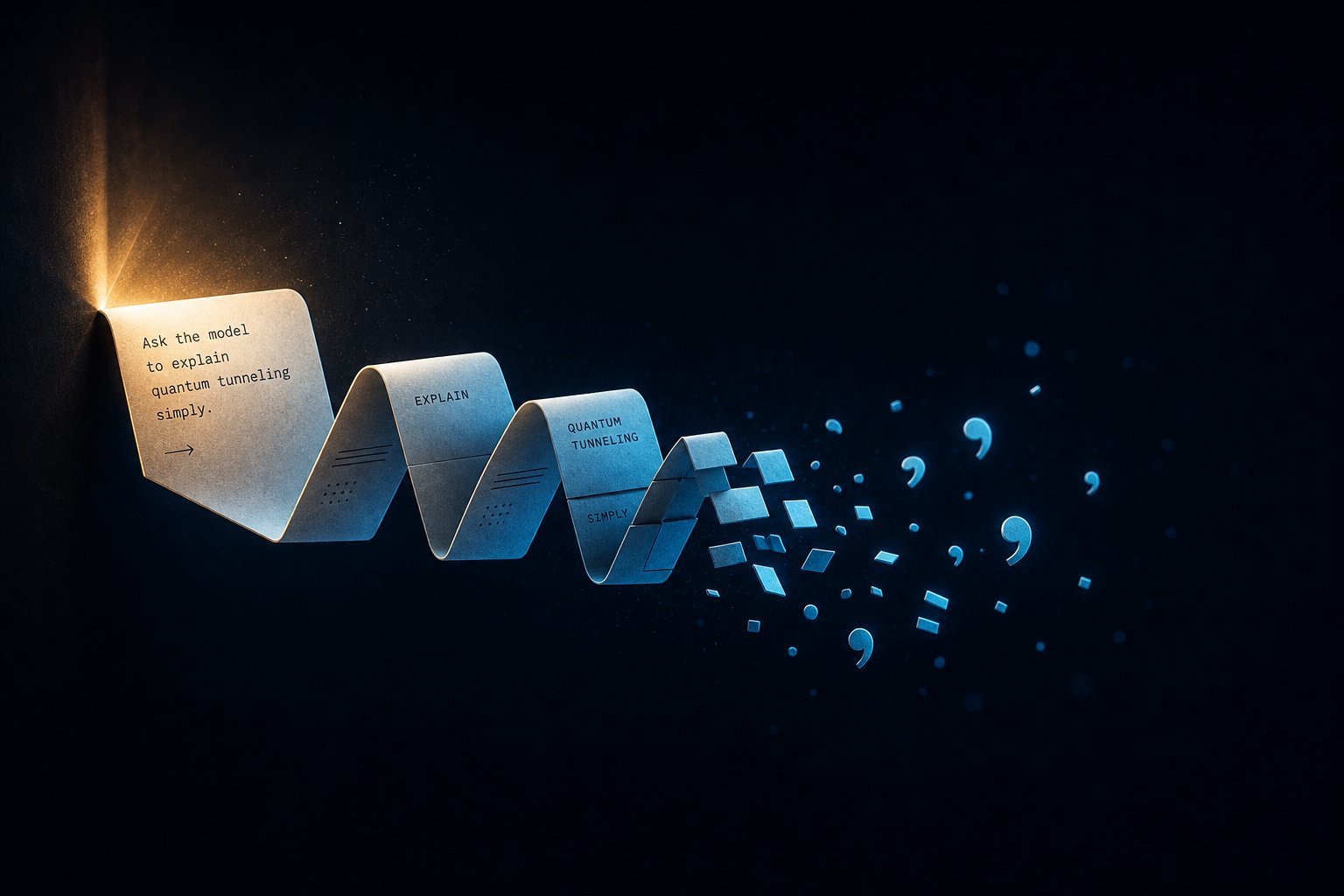
Prompts increasingly act like indirect, fragmentary requests rather than fully spelled-out instructions, with fewer politeness markers, as LLM use becomes routine. The research analyzes real ChatGPT prompts from 2023 and 2025 and finds this clear shift in how people write.
So what: update your prompting style to provide the essential content and desired outcome while relying on the model to infer the rest from context. When results drift, add only the missing constraints instead of reverting to long, formal templates.
Caveat: implicit phrasing can increase ambiguity if your context is incomplete, so you may still need targeted structure (e.g., tone, format, or next steps) when the task is underspecified.
On this page
- Introduction
- Why This Matters
- How Prompts Function as “Requests,” Not Just Text
- What Changed Between 2023 and 2025 in Real Prompts?
- The Largest Change: Users Say Less About What They Want
- Politeness Markers Decline: Less “Please,” More Efficiency
- What This Means for Prompting (Without Over-Engineering It)
- Key Takeaways
- Key Takeaways
Future-Proof Your Prompts: How Language Turns Into Action
(2026 research shows requests get shorter, less polite, and more “implicit”)
Introduction
If you’ve ever typed something like “Translate this,” and your chatbot immediately knew what you meant, you’ve already experienced the weird new reality this paper is digging into: prompts don’t just “contain instructions”—they perform actions. In linguistics terms, they work like speech acts—utterances that do something (requests, commands, information-seeking questions), not just sentences that describe reality.
New research from Kristina Šekrst and Virna Karlić (based on the original paper) analyzes 2,000 real English prompts pulled from publicly shared ChatGPT conversations: 1,000 from 2023 and 1,000 from 2025. The big question is simple: How do people’s prompts change as using LLMs becomes more routine? And the answer is surprisingly concrete: over time, prompts move toward being more indirect, more implicit, more fragmentary, and less likely to include politeness markers.
What’s especially interesting is why these changes seem to happen. The authors argue that users aren’t just being lazy or sloppy—they’re updating their expectations about what the system can infer. In effect, people start treating the model like a competent “implicature resolver”: you don’t need to spell everything out, because the system can recover your intent from reduced input.
Why This Matters
This research is significant right now because we’re at the stage where most people have stopped treating LLM chat as a novelty and started treating it like infrastructure—something you talk to while working. That shift changes the “grammar” of requests. You can see it everywhere: shorter messages, fewer “please/thank you” niceties, and more “here’s the text” followed by the assumption the model will do the rest.
A real-world scenario: imagine you’re a customer support lead training a workflow bot to draft responses. In 2023, you might write prompts like: “Please analyze the customer message and summarize the issue, then draft a reply.” By 2025, you’ll notice teams gradually drift toward: “Customer message: [paste]. Draft reply.” or even “Here’s the message—reply with empathy + next steps.” That’s not only a style change. It’s a shift in how responsibility is distributed between human and system: you provide less explicit structure, and the bot is expected to infer more.
How does this build on previous AI research? A lot of prompt engineering work focuses on technical reliability: formatting rules, role prompts, chain-of-thought scaffolding, and so on. This paper adds a complementary layer: it studies the pragmatics—the “what people are actually doing with language” side. Instead of asking “Does the model understand words?”, it asks what kind of language users learn to speak once the model becomes conversational. That’s a different (and arguably more durable) lens than the usual “try this prompt template” advice.
How Prompts Function as “Requests,” Not Just Text
Prompts behave like directives with a pragmatic job to do
The paper leans on speech act theory: utterances are actions. In most human-to-chatbot interactions, prompts fall into directive territory—users try to influence what the system does next.
Importantly, directive speech acts come in different strengths and packaging. In everyday conversation, strong directives can feel intrusive (“Do that now!”), so people soften them with politeness strategies (“Could you… please?”). In human-AI chat, however, the situation is different: the model doesn’t have human “face” in the social sense. So the paper treats politeness markers less like morality tokens and more like interactional signals—things people include because of habit, expectation, or perceived cost/benefit.
The authors use a pragmatics-and-politeness lens to code each prompt along several dimensions, including:
- Illocutionary force (what kind of directive it is, directly or indirectly)
- Directness (direct imperative vs indirect form)
- Propositional content (whether the requested action is stated explicitly or implied)
- Politeness markers (presence of “please,” greetings, thanks, etc.)
Then they compare how these distributions change between 2023 and 2025.
Direct vs indirect: the “visible command” vs “coded intent”
A useful analogy: think of direct prompts as turning on a light with a switch, while indirect prompts are hinting that someone should turn on the light and expecting the listener to infer the missing step.
In 2023, direct directives are more common; by 2025, indirect directives grow. In other words, people increasingly rely on forms where the “directive force” is less explicitly stated.
What Changed Between 2023 and 2025 in Real Prompts?
The dataset: 2,000 prompts from shared ChatGPT conversations
Before jumping into results, here’s the structure of the study so the numbers make sense:
- Total prompts analyzed: 2,000
- Per year: 1,000 from 2023 + 1,000 from 2025
- Source: ShareChat dataset, drawn from publicly shared URLs
- Context: Prompts include both conversation-initial turns and continuation turns (important for why “implicitness” rises)
The authors annotate prompts for pragmatic features using a schema built from speech act and politeness theory, with a manual calibration step and model-assisted labeling (then human correction).
That matters because they’re not just guessing at “vibes.” They’re coding specific categories.
Prompt type composition: directives dominate, phatic becomes slightly less common
The paper asks: How often are prompts actually directive (task/info) vs phatic (social/interactional)?
They find directives dominate both years:
| Prompt type | 2023 | 2025 | Change |
|---|---|---|---|
| Directive | 977 (97.7%) | 984 (98.4%) | +0.7 pp |
| Phatic | 23 (2.3%) | 16 (1.6%) | -0.7 pp |
The change is small, but directionally consistent with the broader trend: the corpus becomes even more task-centered and slightly less “social.”
Directness shifts: indirect directives rise by 7.4 percentage points
Next, the core shift: direct vs indirect directives.
| Illocutionary force (directive prompts) | 2023 | 2025 | Change |
|---|---|---|---|
| Direct directives | 642 (65.7%) | 574 (58.3%) | -7.4 pp |
| Indirect directives | 335 (34.3%) | 410 (41.7%) | +7.4 pp |
Here’s the key interpretation the authors give: in interpersonal human conversation, indirectness is often motivated by politeness (mitigating a face-threatening act). But with chatbots, the paper argues the growth of indirectness isn’t primarily “because people suddenly became polite.” Instead, the likely motive is that users have started outsourcing more inference work to the system. They don’t need the directive to be spelled out as literally; the model can infer intent from surrounding context.
Subtypes inside direct/indirect: imperatives decline; reduced forms explode
The paper goes deeper than just direct vs indirect. It breaks down directive subtypes.
For direct directives, two forms matter most:
- Imperatives (e.g., “Translate this…”)
- Information-seeking interrogatives (e.g., “Who wrote this song?”)
Imperatives decline:
| Direct directive subtype (as share of all directives) | 2023 | 2025 | Change |
|---|---|---|---|
| Imperative | 333 (34.1%) | 276 (28.0%) | -6.0 pp |
| Information-seeking interrogative | 316 (32.3%) | 309 (31.4%) | -0.9 pp |
So information-seeking questions basically hold steady, but the classic “do X” imperative loses ground.
For indirect directives, the paper reports a more dramatic reshuffling:
| Indirect directive subtype (as share of indirect directives) | 2023 | 2025 | Change |
|---|---|---|---|
| Assertive | 172 (51.3%) | 195 (47.6%) | -3.8 pp |
| Task-seeking interrogative | 83 (24.8%) | 51 (12.4%) | -12.3 pp |
| Incomplete | 42 (12.5%) | 89 (21.7%) | +9.2 pp |
| Raw input | 38 (11.3%) | 75 (18.3%) | +7.0 pp |
The big takeaway: incomplete constructions and raw input rise a lot. In normal terms, this is where prompts look like:
- “Translate song” (fragment/incomplete style)
- or just pasting content with minimal framing (“[lyrics]”)
The authors summarize this as fragmentary and unframed prompts becoming a much larger chunk of indirect directives:
- 23.8% of indirect directives in 2023
- rising to 40.0% in 2025
That’s a substantial internal reorganization—not a tiny fluctuation.
The Largest Change: Users Say Less About What They Want
Propositional content flips from explicit to implicit (14.9 pp shift)
Now for the headline result of the paper: the biggest single shift isn’t just directness or politeness. It’s whether users explicitly state the requested action.
Among task-oriented directives, the requested action moves from mostly explicit to mostly implicit:
| Propositional content | 2023 | 2025 | Change |
|---|---|---|---|
| Explicit | 416 (62.9%) | 324 (48.0%) | -14.9 pp |
| Implicit | 245 (37.1%) | 351 (52.0%) | +14.9 pp |
This is the largest single change across their measured dimensions.
What does “explicit vs implicit” mean in practice?
- Explicit: the prompt names the action (“translate,” “summarize,” “explain”)
- Implicit: the action is inferred from context or framing (“here’s the song” → translation implied)
The authors argue this suggests a behavioral update: users increasingly assume the system can recover the intended task from reduced cues. Instead of providing the action verb, users delegate more of the “figuring out what you meant” work to the model.
Why context (continuation turns) makes implicitness easier
The paper also notes that part of this shift comes from prompt position in a conversation. Continuation turns rely on prior context, so implicitness becomes more likely. When they restrict analysis:
- For conversation-initial prompts only, explicit content goes from 67.6% (2023) to 55.4% (2025)
- It still declines by 12.2 pp, even without the strongest contextual advantage of multi-turn chats
So even at the start of conversations, users are trending toward implicitness. Conversation structure amplifies the effect, but it’s not the only driver.
Politeness Markers Decline: Less “Please,” More Efficiency
Politeness drops by 5.3 percentage points
Finally, the paper measures politeness/interactional markers—things like “please,” “thank you,” greetings, praise, etc.
Presence of politeness markers declines:
| Politeness markers in directives | 2023 | 2025 | Change |
|---|---|---|---|
| Present | 158 (16.2%) | 107 (10.9%) | -5.3 pp |
| Absent | 819 (83.8%) | 877 (89.1%) | +5.3 pp |
So even though politeness never dominates the corpus (directives are already mostly task-oriented), fewer prompts include these markers over time.
Interpretation: politeness is less “functionally required” in human-AI chat
The authors’ pragmatics argument is that politeness strategies are mainly motivated in interpersonal communication by face-saving—mitigating the intrusiveness of directives. But chatbots don’t have the social “face” that motivates those strategies.
So the decline fits a pattern: users increasingly treat the AI as an instrument for task completion rather than a social interlocutor. That aligns with other findings too—like the decline of explicit action specification. If you’re already delegating more intent to the system, you also omit some of the interactional overhead.
What This Means for Prompting (Without Over-Engineering It)
If you want the practical “so what,” here it is
You can interpret this research as evidence that the prompt language people use is evolving into a new conversational register. It’s neither pure “command line” (too explicit) nor classic human politeness (too social). It’s something in-between:
- Indirectness rising: users increasingly stop relying on literal “do X” structures
- Implicitness rising: users stop repeating the action verb when context makes it guessable
- Fragmentation rising: users omit full sentences and rely on minimal cues
- Politeness declining: users stop spending tokens on “please/thanks” as much
A quick “try this” guidance for today
If you’re writing prompts right now, you don’t need to be rude to be effective. But you can borrow the trend:
- For routine transformations (summarize, translate, format), you can often reduce explicit phrasing and instead provide strong context + the content.
- For complex tasks where the desired behavior is easy to misinterpret, don’t over-rely on implicitness—be explicit about constraints even if you keep the tone short.
- If you’re seeing failures, it often means the model didn’t have enough cues to infer the missing action. In that case, adding back an explicit action verb is a straightforward fix.
And if you’re curious about the underlying evidence, this aligns with the paper’s central claim in the original work: people are updating what they think the system can infer from reduced input.
Key Takeaways
Key Takeaways
- Prompts are evolving as pragmatic behavior, not just technical text. Over time, users talk to LLMs in a changing “prompt dialect.”
- Directive prompts dominate both years (97.7% in 2023 → 98.4% in 2025). Phatic prompts stay small and slightly decrease (2.3% → 1.6%).
- Indirect directives increase by 7.4 percentage points (65.7% direct → 58.3% direct; 34.3% indirect → 41.7% indirect).
- Imperatives decline (34.1% → 28.0%), while information-seeking questions stay roughly stable (32.3% → 31.4%).
- The biggest change is propositional content: explicit action verbs drop 62.9% → 48.0% (-14.9 pp), while implicit action rises to 52.0% (+14.9 pp).
- Politeness markers fall from 16.2% to 10.9% (-5.3 pp), supporting the idea that users treat chatbots more like tools than social partners.
- Practical implication: you can often shorten prompts by relying on context—but when tasks are ambiguous, adding back explicit action wording improves reliability.
- Future direction suggested by the paper: different user communities (non-professional vs technical prompt engineers) may converge on different pragmatic registers, so “best prompts” may depend on who you are and what conversational habits you share with the model ecosystem.
Sources Used
This article is a plain-English breakdown of the following peer-reviewed preprint. Read the original for full methodology and results:
- How To Do Things With Prompts — arXiv
- Authors: Authors: Kristina Šekrst, Virna Karlić