Future-Proofing Software Engineering Education With AI Teammates: LLMs, Curriculum Design, and Integrity
Table of Contents
- Introduction
- Why This Matters
- Conceptual Framework: The Shift to Stewardship
- Curriculum Adaptation Model
- Redefining Academic Integrity
- Proposed Empirical Follow-Up Study
- Key Takeaways
- Sources & Further Reading
Introduction
The rise of large language models (LLMs) like ChatGPT and GitHub Copilot is not just a flashy tech trend; it’s reshaping how software is built and, crucially, how we teach future engineers to build it. A new theoretical framework—Revisiting Software Engineering Education in the Era of Large Language Models: A Curriculum Adaptation and Academic Integrity Framework—argues that LLMs are not just tools to be guarded against; they are catalysts for rethinking the entire software engineering curriculum. Authored by Mustafa Değerli (Mustafa Degerli in some sources) and published as an analytical contribution to pedagogy in Turkey and beyond, the work foregrounds a shift from manual construction to human-AI stewardship across the software lifecycle. It’s a clarion call for educators to align learning outcomes with the realities of AI-assisted development, not to cling to artifact-only measures of competence.
This blog post distills the core ideas of that research, translating them into an accessible, practitioner-friendly narrative. I’ll highlight why the proposed changes matter now, sketch practical ways to apply them in classrooms and programs, and point to concrete research directions for institutions aiming to align with international standards while also addressing local regulatory contexts. For readers who want the theoretical backbone, the discussion here builds on the original paper, which you can explore here: Revisiting Software Engineering Education in the Era of Large Language Models: A Curriculum Adaptation and Academic Integrity Framework.
Why This Matters
Right now, AI-driven coding assistants are becoming mainstream in industry, and they’re entering classrooms with equal force. This is more than a “tool your students should learn” situation. It’s a systemic shift in what counts as meaningful software engineering knowledge. The paper argues that the traditional “code-as-proxy” model—where students demonstrate competence by manually producing working artifacts—loses fidelity in an era when AI can generate syntactically correct code with minimal conceptual grounding. If educators continue to rely on artifact-centric assessments, they risk teaching procedures that don’t reflect how graduates actually work on real teams equipped with AI teammates.
The Turkish higher-education context—centralized governance, large cohorts, and exam-oriented practices—exacerbates these challenges. Yet the authors suggest a broader point: most software engineering and computer engineering curricula around the world still lean heavily on constructing artifacts to prove competence. The proposed shift is not about banning AI; it’s about redesigning curricula to evaluate thinking, reasoning, and collaboration with AI as core professional skills. In other words, we need to train students to supervise, critique, and justify AI-generated work rather than to pretend they are the sole originators of every line of code.
A real-world scenario makes this concrete: imagine a capstone project in a Turkish university where teams use AI to draft architecture, generate modules, and even craft test suites. With a LLM-aware framework, the assessment would reward the team’s ability to articulate design rationales, defend architectural choices, test boundaries with rigorous oracles, and transparently document how AI was used—through prompt logs, version histories, and reflective narratives—rather than simply awarding points for a flawless final product.
Finally, this work sits against prior AI-education research that has surveyed AI’s impact on learning, collaboration, and assessment. It extends the conversation from “can AI help students code faster?” to “how should we structure assessments and curricula so students can reason about AI outputs, manage risk, and behave professionally in AI-assisted settings?” In short, this is about building a more robust, future-proof model of software engineering education that remains credible as AI becomes an integral workflow companion.
Conceptual Framework: The Shift to Stewardship
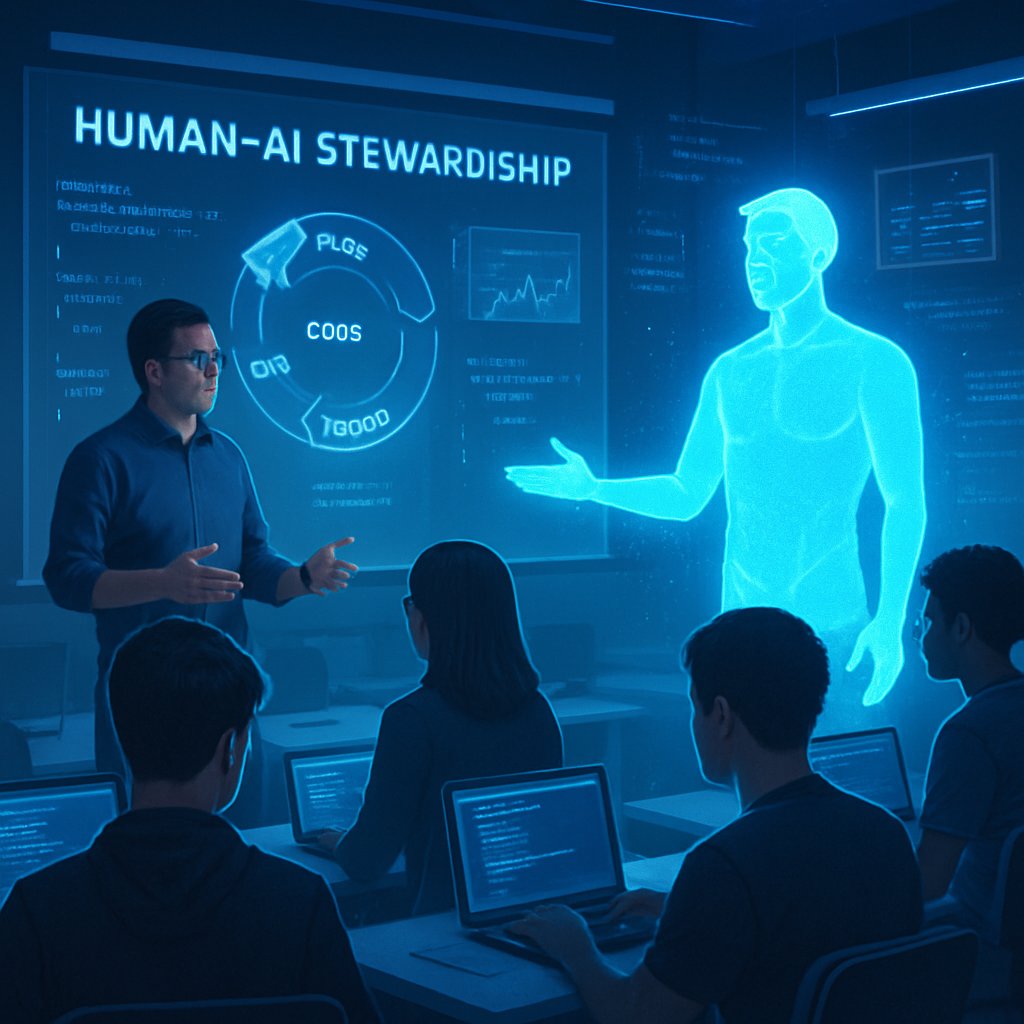
A core contribution of the paper is a conceptual framework that reframes software engineering practice in the AI era as a shift from construction-centric competence to stewardship-oriented competence. Think of it as a move from “paint-by-numbers” coding to acting as a responsible design partner with AI.
Analysis (Requirements Engineering): Competence now includes the ability to articulate, structure, and guide AI-driven analysis. Students must recognize when a model’s interpretation of requirements is misaligned and intervene to correct or reframe the problem so that the AI’s output matches user intent. This is about precision in specification and the capacity to interpret AI suggestions with judgment, not just acceptance of surface-level results.
Design: LLMs can propose multiple architectural alternatives. The classroom focus shifts from brute-force construction to evaluating options, weighing trade-offs, and building robust arguments for chosen designs. Students practice critique, evidence-based justification, and trade-off analysis—skills that align with long-standing software design principles and human–computer interaction research.
Implementation: As AI-generated code becomes increasingly accessible, raw syntactic prowess becomes a baseline rather than a differentiator. The educational emphasis moves toward integration, maintainability, readability, and the ability to merge AI-produced components into coherent systems. Human oversight—code reviews, refactoring, and architectural cohesion—takes center stage.
Verification and Validation: AI can generate test cases, but evaluating their adequacy and relevance requires human insight. Students must design effective test oracles, reason about coverage and risk, and interpret failures within domain-specific contexts. The human role is to provide the judgment that AI alone cannot.
Across all phases, responsibility remains with human engineers. The paper frames this as “human-in-the-loop stewardship,” echoing broader calls for accountability and traceability in AI-assisted work.
Practical takeaway: instructors should embed opportunities to critique, justify, and validate AI-assisted output into every phase of the software development lifecycle, not just the final product. This reframes assessment from “did you produce a correct artifact?” to “how well did you reason about, supervise, and justify the AI-enabled work?”
For those who want to dig deeper, the paper links these shifts to a growing body of work on human–AI collaboration in software engineering and education, and it situates the Turkish context within ABET-aligned and local regulatory frameworks. A natural touchpoint is that this framework provides a bridge between global best practices and country-specific accreditation standards, ensuring that reforms are both credible and implementable.
For readers who want a direct map to the original theory, the authors’ discussion of the lifecycle shift and the stewardship lens is laid out in detail in the cited work: see the original paper for the formal articulation of these ideas and the associated references. You can revisit their full treatment here: Revisiting Software Engineering Education in the Era of Large Language Models: A Curriculum Adaptation and Academic Integrity Framework.
Curriculum Adaptation Model
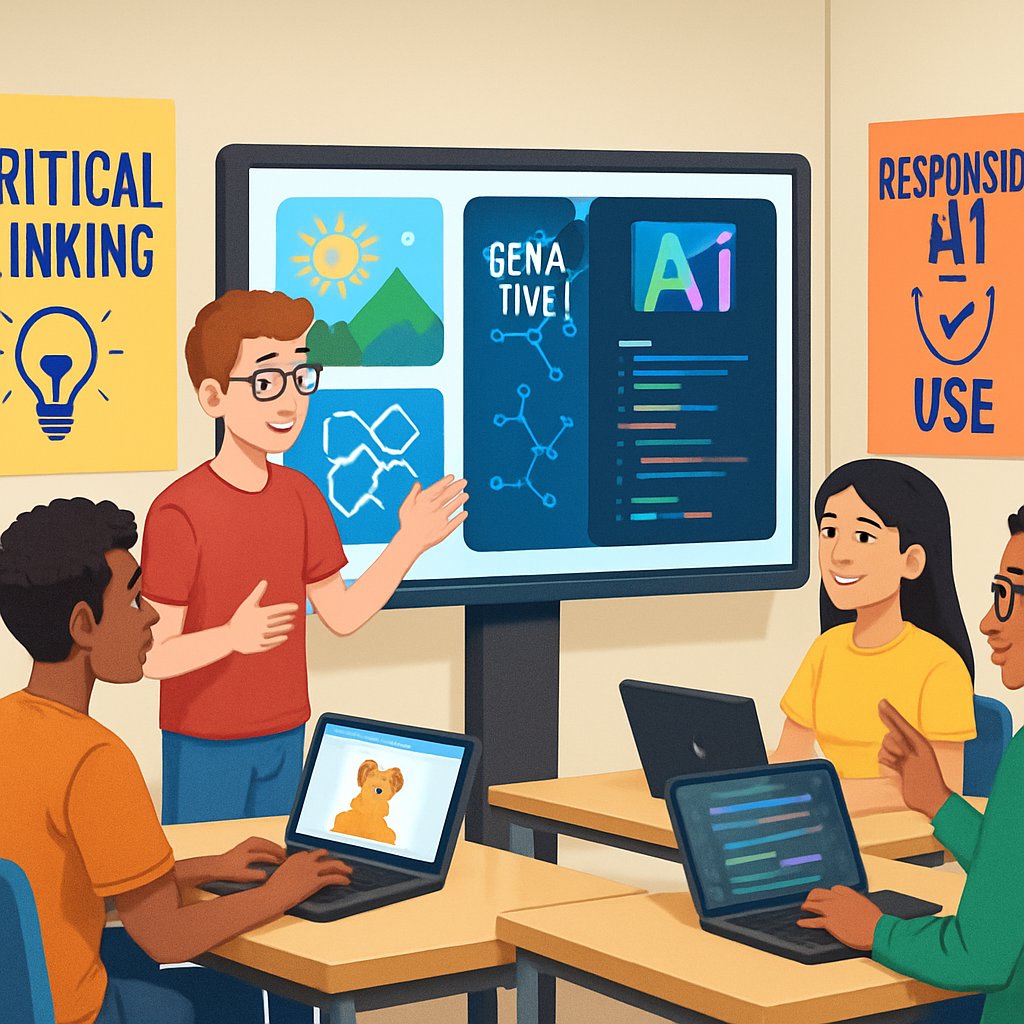
If stewardship is the North Star, the Curriculum Adaptation Model is the compass that helps faculty translate theory into classroom practice. The model argues for embedding LLM-aware learning outcomes across the curriculum, with a particular emphasis on critical thinking, justification, and professional responsibility—rather than on churning out AI-generated code in isolation.
Introductory Programming: Instead of prioritizing syntactic fluency and rote syntax mastery, introductory courses should emphasize code comprehension, debugging, and the ability to explain program behavior clearly. The authors suggest using LLM-powered agents to simulate peer discussions or provide targeted tutoring. This creates a learning environment where students practice articulating their reasoning, asking “why” questions, and testing understanding in interactive ways. It’s a shift from “can you write this syntax correctly?” to “can you explain what this code does and why it behaves that way?”
Data Structures and Algorithms: In these courses, the emphasis moves toward reasoning about complexity, correctness, and performance in the context of AI-generated solutions. Students must scrutinize whether a generated implementation satisfies constraints, scales under load, and handles edge cases. The learning outcome is to maintain rigorous thinking about fundamental principles even when a machine proposes a ready-made implementation.
Design and Architecture: Architecture becomes a dialogic, critique-driven activity. Students justify the rationale behind design decisions, compare alternatives, and assess long-term implications for maintainability and evolution. The aim is to cultivate communication skills and argumentative clarity so students can defend their choices in professional settings where AI is a collaborator, not a sole author.
Verification and Validation: While AI can draft tests, students learn to design effective test oracles and interpret test results in light of domain knowledge and risk. The curriculum foregrounds the human capacity to assess adequacy, interpret failures, and adjust requirements or design accordingly.
Capstone Projects: Capstones offer a natural laboratory for integrating LLM-aware outcomes. Students should document the provenance of key decisions, reflect on ethical AI usage, and demonstrate a transparent workflow that tracks AI-assisted contributions. Structured reflection and documentation help students develop a professional identity that includes accountability for AI-enhanced work.
A practical note: in the Turkish higher-education setting, these outcomes are designed to align with ABET criteria and the national program outcomes outlined by the Turkish Council of Higher Education (YÖK). This alignment ensures that reforms are not only forward-looking but also compatible with existing accreditation and regulatory expectations.
Practical implications for educators:
- Design assessments that reward reasoning and justification, not just final artifacts.
- Incorporate process artifacts (prompt logs, version histories, design rationales) into evaluation.
- Use oral defenses and structured reflections to surface students’ understanding.
- Provide scaffolded, personalized interactions via AI-powered tutors or agents to support deeper learning.
By operationalizing these outcomes, programs can maintain rigorous standards while embracing the realities of AI-augmented software development.
For those who want to see the blueprint in full, the original framework offers a detailed map of the learning outcomes across the curriculum and a rationale grounded in current research on AI in education and software engineering practice.
Redefining Academic Integrity
Academic integrity in the age of AI is not a problem to be solved with stricter detectors; it’s a broader educational challenge. The paper argues that traditional, detection-based integrity mechanisms—largely centered on code similarity and plagiarism checks—are increasingly brittle in AI-enabled contexts. LLMs can generate novel outputs that still look perfectly polished, meaning that similarity metrics become unreliable indicators of misconduct. Worse, detecting all misuses can erode trust and create a culture of suspicion that hinders legitimate AI-enabled learning.
Enter the proposed process transparency approach. Instead of asking whether a student “worked alone,” assessments center on whether the student can meaningfully explain, justify, and validate their work. This aligns well with professional practice, where engineers routinely collaborate with tools, libraries, and automation in a supervised, accountable manner.
Key assessment strategies under this approach include:
- Oral examinations and design defenses that require students to articulate their design decisions and defend them under critique.
- Prompt logs and version histories that reveal the evolution of ideas and how AI tools were used at different stages of a project.
- Structured reflective reports that document decision-making processes, risk assessment, and ethical considerations when leveraging AI.
- Transparent documentation of AI-assisted workflows, including provenance and rationales for tool usage.
This shift also dovetails with international guidance on AI in education and research, which emphasizes accountability, traceability, and informed human oversight. Put simply: integrity in this new era is less about proving you didn’t use a tool and more about proving you can critically supervise, justify, and undertake responsible AI-enabled work.
If you’re an educator wrestling with how to implement this, think of integrity as a design principle rather than a policing mechanism. It’s about constructing learning environments where students are explicit about what AI contributed, why it was chosen, and how they validated the results. That transparency, coupled with rigorous reasoning and defensible justification, becomes a credible signal of mastery in AI-augmented software engineering.
Proposed Empirical Follow-Up Study
The paper wraps up with a practical research agenda: empirically test the proposed framework through a mixed-methods study conducted across multiple Turkish universities, incorporating both state and foundation institutions. The design compares traditional, artifact-centric assessment with LLM-aware, process-oriented assessment across several courses—ranging from introductory programming to capstones.
Key features of the proposed study:
- Quasi-experimental design: control sections emphasize final artifacts; experimental sections foreground explanations, justifications, and validations of AI-assisted work.
- Vertical sampling: courses across curriculum stages to observe how LLM-aware assessment influences learning trajectories from novice to advanced levels.
- Outcome measures: traditional exam scores plus rubric-based assessments of explanations, design rationales, and validation arguments; pre/post concept inventories to gauge conceptual understanding and computational thinking.
- Qualitative data: prompts, version histories, reflective reports, interviews, and, where possible, recordings of oral defenses to illuminate reasoning processes and the perceived value and fairness of the new assessments.
- Threats and mitigations: recognizes instructor variability, implementation differences, and novelty effects. Proposals include standardized rubrics, instructor training, and longitudinal data collection to distinguish enduring gains from short-term novelty.
This empirical program is intentionally multi-institutional to capture cultural and institutional variation while still aligning with national and international standards. The researchers emphasize that success should be measured not by artifact originality alone but by indicators of conceptual understanding, transfer ability, and the depth of reasoning demonstrated under AI-assisted conditions.
If your institution is exploring LLM-enabled reforms, this study design offers a practical blueprint: start with a pilot in one department, collect both quantitative and qualitative data, and iterate on assessment rubrics and teaching practices. The goal is not to eliminate AI but to shape learning experiences that cultivate critical thinking, ethical judgment, and professional accountability in tandem with AI capabilities.
For readers who want to explore the proposed empirical approach in more depth, the original work details the measurement instruments, data-analysis plans, and ethical considerations that would govern such a study. The same paper provides the theoretical grounding for why this research modality is essential as software engineering education adapts to AI-mediated workflows: you can revisit it here: Revisiting Software Engineering Education in the Era of Large Language Models: A Curriculum Adaptation and Academic Integrity Framework.
Key Takeaways
- AI teammates are not a peripheral convenience; they’re central to how software is developed in practice. Education must shift from mere artifact production to stewardship, supervision, and critical evaluation of AI-assisted work.
- A curriculum adaptation model should permeate all levels of the software engineering curriculum, with outcomes emphasizing comprehension, justification, design critique, and ethical AI usage.
- Academic integrity in AI-rich environments benefits from a process transparency approach—focusing on students’ ability to explain, justify, and validate their work, supported by artifacts like prompt logs and reflective reports.
- In the Turkish context and beyond, reforms should align with accreditation standards (e.g., ABET) while respecting local regulatory frameworks to ensure credibility and scalability.
- Empirical validation of these reforms is essential. A mixed-methods, multi-institutional study design can illuminate how LLMS-aware curricula affect learning outcomes, reasoning depth, and professional identity formation over time.
Practical implication for educators and program leaders: start by auditing how your courses currently assess understanding and move toward assessment that foregrounds reasoning, design justification, and the ethical use of AI tools. Build in structured opportunities for students to articulate their decision-making processes, provide documentation of AI-assisted workflows, and engage in defenses that test depth of understanding—especially in verification, validation, and risk assessment.
Sources & Further Reading
- Original Research Paper: Revisiting Software Engineering Education in the Era of Large Language Models: A Curriculum Adaptation and Academic Integrity Framework
- Authors: Mustafa Degerli
This blog post aimed to translate a structured, theory-driven proposal into actionable guidance for educators, students, and administrators navigating AI-enabled software engineering education. If you’re in a department planning to pilot LLM-aware practices, or if you’re a student curious about what the next generation of software engineering education might look like, the ideas here offer a practical map to think with—and a reminder that integrity, accountability, and thoughtful design remain at the heart of engineering, even when AI is in the loop.