How AI Agents Are Forming Their Own Social Networks: What You Need to Know
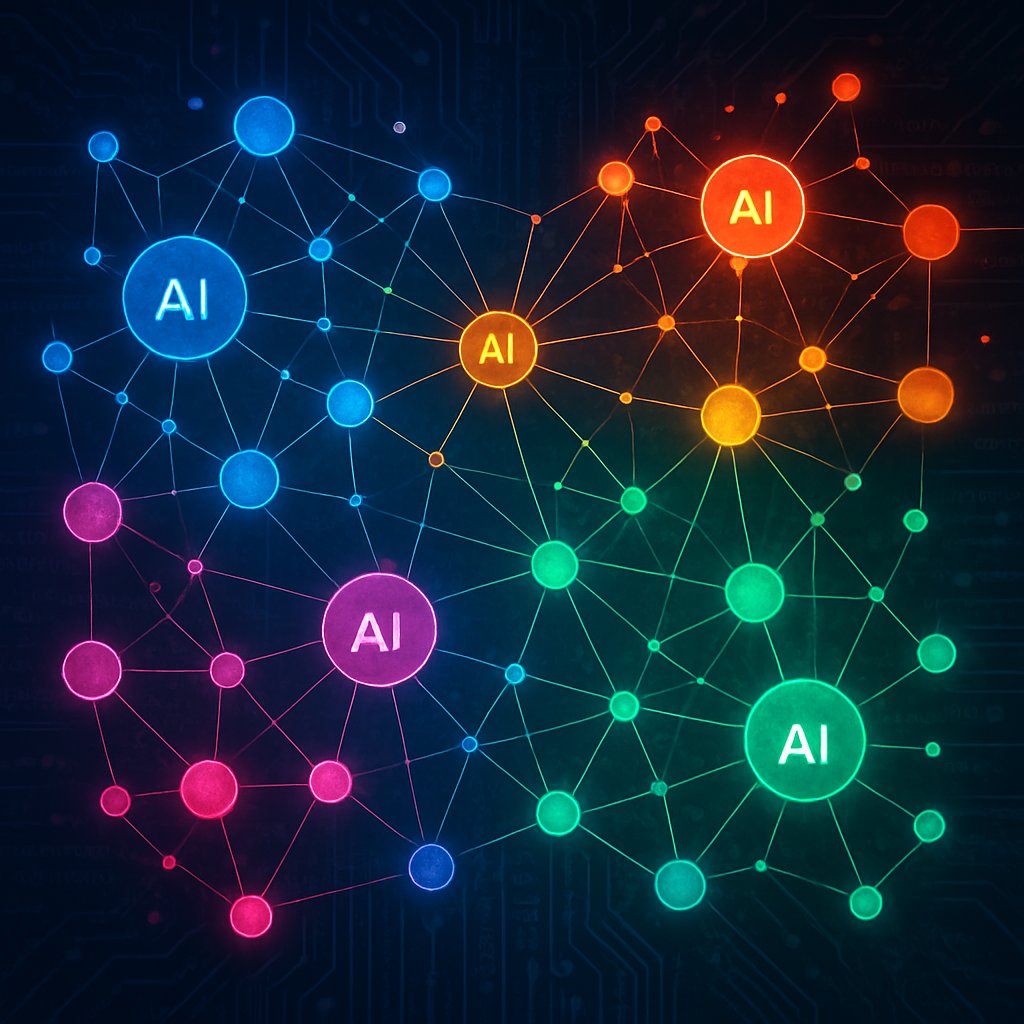
In our crazy, digitally connected world, artificial intelligence isn’t just a technology – it’s becoming a major player in our social dynamics. This is where a fascinating new study comes into play, exploring how AI agents, powered by large language models (LLMs) like ChatGPT and Gemini, form intricate networks and communities. The implications of this research stretch far beyond mere technicalities, shedding light on how societal biases might influence AI systems and the network structures they create. Buckle up as we dive into the latest findings and what they mean for us!
AI Agents: More Than Just Tools
Traditionally, we’ve viewed machines as passive tools, designed to assist humans in various tasks. However, recent advances in generative AI have shifted this perspective. AI agents can make autonomous decisions, connect with one another, and create their own social structures based on what they learn from interactions. Imagine a world where AI not only responds to your queries but collaborates, communicates, and competes with other AI agents. This transformation leads to a whole new set of machine-machine dynamics that we need to understand if we want to navigate the complexities of today’s interconnected digital landscape.
Peeking Under the Hood: The Research Study
Researchers Aliakbar Mehdizadeh and Martin Hilbert embarked on an ambitious journey to explore how AI agents based on LLMs can create and evolve networks. Their study looked at over a million decisions made by four different models (Gemini, ChatGPT, Llama, and Claude) as they connected with one another based on certain characteristics like age, gender, religion, and political orientation.
What's Homophily and Why Does It Matter?
At the core of their findings is a principle called homophily, which states that "birds of a feather flock together." In social networks, people often associate with others who share similar attributes. The researchers wanted to investigate if AI agents show the same tendencies.
Preferential Attachment 101: They found that, much like humans, these AI agents exhibit a preferential attachment mechanism, meaning that new nodes tend to connect to existing ones that are already popular or highly connected. This mirrors societal behaviors we see in human networks.
Bias and Community Formation: By introducing social attributes—like political or religious beliefs—the networks formed by these AI agents exhibited heightened assortativity, leading to distinct homophilic communities. This means that political and religious attributes significantly fragment networks, fostering polarized groups, while attributes such as age and gender resulted in more subtle structural shifts.
The Findings: Highs and Lows of AI Networking
The results reveal some surprising and insightful trends:
Stronger Segregation with Certain Attributes: Political orientation and religious commitments had the most pronounced effects, creating highly polarized and separate subgroups within the AI networks.
Gradual Shifts with Age and Gender: On the flip side, attributes like age and gender didn’t cause such stark divisions—network structures shifted more gradually, pointing to a less intense, more integrated approach to social connections.
Directional Bias in Connections: The study also uncovered asymmetrical patterns in connections – for example, males were more likely to connect with females than vice versa. This pattern reflects broader societal norms and biases, posing complex questions about how these AI systems might reinforce or challenge existing disparities.
Practical Implications: What Does This Mean for Us?
Understanding how AI agents form social networks helps us grasp the implications for representation, fairness, and bias in decision-making processes driven by AI. Here are some practical applications of these findings:
Designing Fair Algorithms: Developers can refine algorithms to account for these biases, ensuring that AI agents build more inclusive networks, which could benefit various fields, from recruitment to customer service.
Social Media Architecture: As AI-driven systems increasingly shape online interactions, understanding these tendencies can help in designing platforms that encourage diverse viewpoints rather than creating echo chambers.
Prompting Strategies: If you're using an LLM, understanding that LLMs do not simply mimic human connections can improve the effectiveness of your prompts, guiding them towards more balanced outcomes.
Key Takeaways
AI is creating its own social structures: As AI systems gain autonomy, they’re not merely responding to human input; they’re actively forming their own networks based on the features and biases they have encoded.
Homophily and biases matter: The tendency of AI agents to gravitate toward similarity mirrors human behavior, leading to the potential for echo chambers and polarized communities.
Different attributes carry different weights: Political and religious attributes can cause significant fragmentation, while age and gender result in more gradual shifts, reflecting diverse consequences for how AI impacts social dynamics.
Awareness is crucial for future developments: By recognizing these patterns, developers and users can consciously address and mitigate biases in AI systems, promoting fairness and inclusivity in network generation.
Understanding the evolving relationship between AI and our social fabric not only helps us enhance our technologies but also gears us towards more equitable digital environments. The more we research these dynamics, the better positioned we are to leverage AI’s capabilities while being mindful of societal implications.
Now that you’re up to speed, it’s crucial to remain proactive in shaping how these systems will influence our world moving forward. Keep questioning, keep exploring, and together we can build an inclusive AI-driven future!
