Unlocking the Future of Learning: How GenAI is Changing the Game for Student Retention
As technology continues to evolve, the way we educate students is transforming right along with it. If you’ve chatted with ChatGPT or scrolled through endless Google search results, you might have wondered: How do these tools affect what students learn and, more importantly, what they remember? A fascinating new study digs into this topic, revealing that while Generative AI (like ChatGPT) and search technologies can boost immediate performance, they might not be the magic bullet for long-term retention. Let’s dive into what the researchers found!
The Rise of Digital Learning Tools
Gone are the days when students flipped through dusty textbooks while searching for answers. Today’s learners have powerful tools like ChatGPT and Google at their fingertips, offering instantaneous access to information. This might seem like a dream come true, but it raises an important question: Are students really learning, or are they just finding answers?
Generative AI tools have revolutionized how we gather and synthesize information. With AI, students can get well-structured answers instantly—no more skimming through pages and pages of e-textbook text. This streamlining is definitely efficient, but it also brings up concerns about whether these tools promote deep learning or just surface-level engagement.
What the Study Investigated
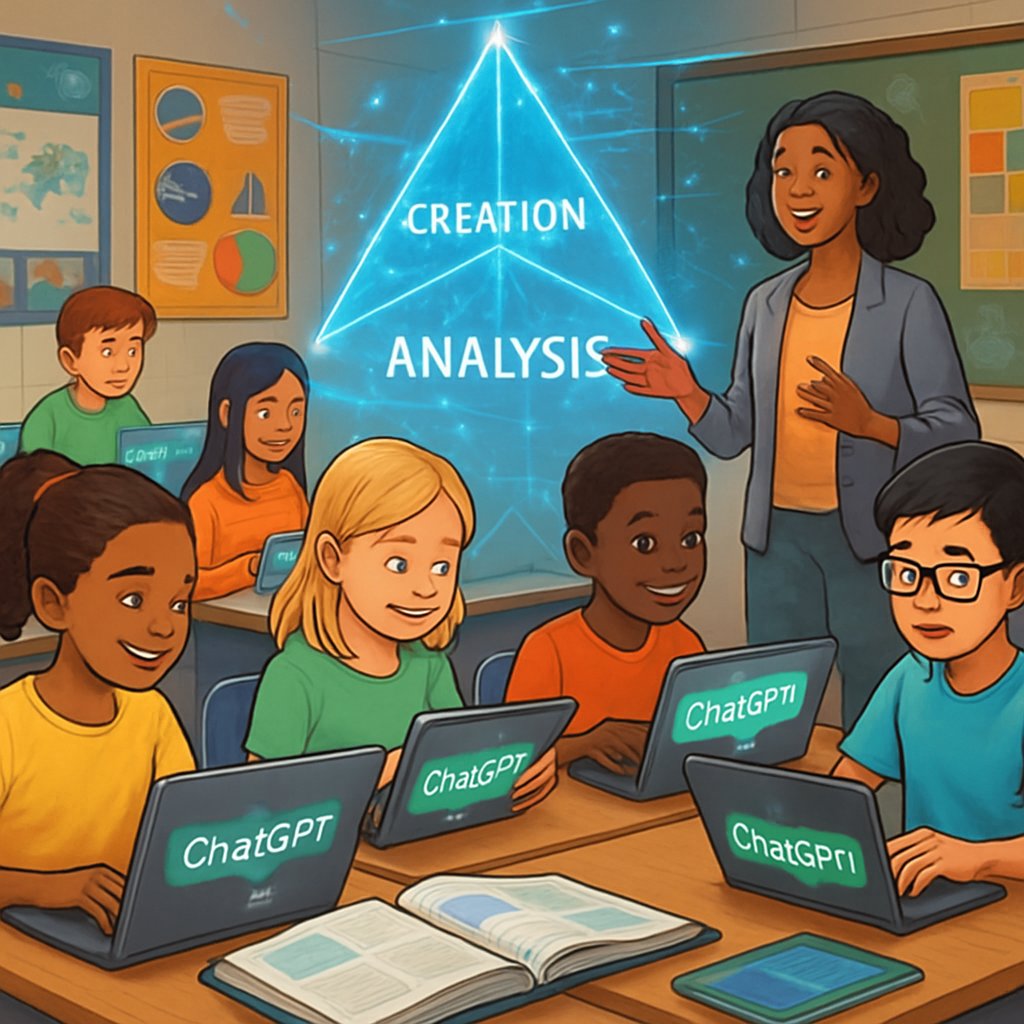
Researchers Mahir Akgun and Sacip Toker examined how three different learning tools—ChatGPT, Google, and e-textbooks—affect student performance and retention. They focused on tasks defined by Bloom’s Taxonomy, a framework that categorizes cognitive skills from basic knowledge recall to complex analysis and creation. The study involved 123 students who completed three sequential tasks, varying in complexity, to see how they fared across different technologies.
Breaking Down Bloom’s Taxonomy
Let’s break down Bloom’s Taxonomy a bit. It includes:
- Remembering: Recall of facts, like a quiz on basic terms.
- Understanding: Explaining ideas or concepts.
- Applying: Using knowledge in practical scenarios.
- Analyzing: Breaking down information into parts.
- Evaluating: Judging the value of information or solutions.
- Creating: Producing new or original work.
The study's tasks ranged from straightforward recall and understanding to complex synthesis and evaluation.
Key Findings: Short-Term Wins vs. Long-Term Losses
The results from the study are quite intriguing. Let’s highlight some key takeaways.
Immediate Performance Boost
1. Instant Gratification: Students using ChatGPT and Google performed significantly better on the lower-order tasks (remembering and understanding). This suggests that access to quick, structured information gives students a boost when it comes to immediate performance.
2. E-textbooks Hold Their Ground: The e-textbook group did reasonably well but didn’t outperform the AI-tool users for immediate scores. However, they managed a stable performance across the assessment.
Declines in Retention
3. The Forgetting Curve: Fast forward a few weeks to the retention tests. While the ChatGPT and Google users saw their scores drop, the e-textbook group showed a more stable grasp of the material over time. This highlights a classic phenomenon in psychology—the forgetting curve, where we lose information quickly if not reinforced.
Higher-Order Thinking Challenges
4. Struggling with Complexity: When tasks demanded higher-order thinking (analyzing and evaluating), all groups showed poorer performance. Interestingly, the control group (who had no tech) did relatively better. This suggests that while tools make initial tasks easier, they might hinder deeper learning processes that require critical thinking.
The Practical Implications: Balancing Tech and Tradition
So what does this mean for the world of education? It’s clear that while tech can make learning more efficient, a holistic approach is necessary.
Teaching Strategies for the Tech-Savvy Classroom
Blend Technologies: Educators should not rely solely on technology. Mixed learning environments, combining traditional methods and new technologies, could enhance both engagement and retention.
Focus on Critical Thinking: Assignments should involve more than just recall. Engage students in tasks that require them to analyze, evaluate, and create, thus fostering deeper cognitive engagement.
Encourage Curiosity: Instead of simply retrieving information, students should be encouraged to ask questions and dive deeper into the subject matter, promoting an active learning environment.
Conclusion: Embracing Both AI and Cognitive Skills
As we continue to integrate advanced technologies like Generative AI into education, we must be mindful of their limitations. While they provide a remarkable advantage in immediate performance, educators need to adopt strategies that nurture long-term retention and critical thinking.
Key Takeaways
- Immediate Performance Boost: GenAI tools and search technologies help students perform better in lower-order tasks.
- Retention Matters: Relying on tech can lead to forgetting important information over time—don’t skip those old-school study methods!
- Complexity Requires Engagement: Higher-order cognitive tasks are a challenge for all tech users, highlighting the need for critical thinking and evaluation skills.
- Blend for Success: A balanced approach using both technology and traditional resources can enhance learning outcomes.
With these insights, both educators and students can strategize better ways to utilize these powerful educational tools while still emphasizing the critical thinking and analytical skills necessary for true understanding. By embracing this hybrid approach, we can unlock the true potential of AI in education. Happy learning!
