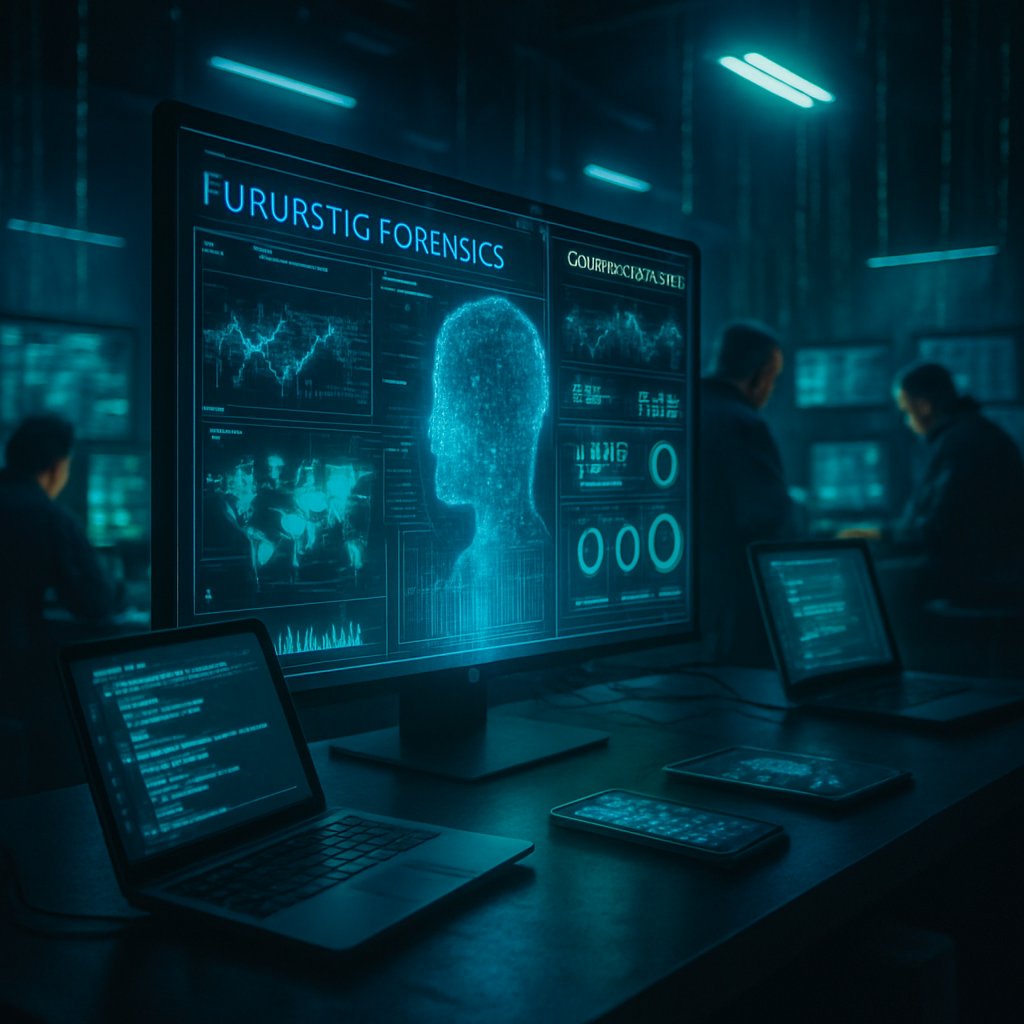
Unmasking Cybercrime: How AI is Shaping Digital Forensics and Crime Detection
Recent reports from EUROPOL show that cybercrime is spiraling out of control, creating a frantic need for effective solutions to combat the issue. The rise of digital devices has transformed how crimes are committed, and traditional approaches to crime detection and investigation have not kept pace. This is where Artificial Intelligence (AI) enters the picture, promising to revolutionize both cybercrime detection and digital forensics (DF).
The Cybercrime Conundrum
At its core, cybercrime encompasses various illegal activities executed using digital technology. Everything from phishing scams to ransomware attacks and identity theft falls under this umbrella. With millions of Europeans falling victim to these crimes daily, the stakes could not be higher. The European Public Prosecutor’s Office recently reported a staggering 3838% increase in cybercrimes, resulting in losses of nearly 24.8 billion euros.
Given the rise in these crimes, traditional forensics, focused primarily on tangible evidence, has had to evolve. Now, concepts of Digital Forensics (DF) have emerged to address the digital realm, ensuring that cybercriminals can be identified and prosecuted effectively. DF delves into analyzing digital devices used in crimes to retrieve critical evidence.
AI: A Game Changer in Fighting Cybercrime
As technology advances, so do cybercriminals, who continually adapt to exploit weaknesses in digital security systems. This is precisely where AI can step in, enhancing cybercrime detection and DF investigations.
A Proactive Approach to Cybercrime Detection
AI has the potential to improve the identification of cyber threats by recognizing common attack patterns and specific types of malicious activities. By training AI models on these sophisticated patterns, authorities can more accurately detect cyber threats.
Generative AI (genAI) takes this a step further, creating even more variations of potential cybercrimes that security systems may face. Think of it as giving AI more examples, making it a well-rounded detective ready to identify new criminal tactics. However, it’s important for human analysts to remain involved in the process. After all, AI can still experience “hallucinations” — situations where it produces outputs that may look right but lack real, logical connections.
Digital Forensics: The New Frontier
Once a cybercrime occurs, the next crucial step is the investigation, carried out via digital forensics. The process involves four main phases: collection, examination, analysis, and reporting. Here’s a closer look at how AI can help in these phases:
Collection: AI can assist in recognizing and cataloging digital devices at a crime scene. Imagine a camera equipped with AI capabilities that not only identifies digital devices but also documents them to ensure no critical evidence is overlooked.
Examination: Here, AI acts as a virtual assistant, guiding forensic experts through the complex steps of data acquisition from seized devices. It’s like having a seasoned detective in the room to help ensure every step is followed correctly.
Analysis: AI can significantly enhance data examination by using sophisticated algorithms to identify and classify multimedia files, making it easier to uncover hidden evidence.
Reporting: Finally, AI can assist in drafting reports for legal use, ensuring that technical jargon is translated into comprehensible language for non-technical individuals, including jurors and court officials.
The Cat and Mouse Game: Cybercriminals vs. Law Enforcement
The research highlights a double-edged sword; while cybercriminals can leverage AI to enhance their methods—developing tactics to evade detection—law enforcement also gains powerful tools in the battle against them.
Steganography, for example, is a technique where information is concealed within a seemingly innocuous file (like an image). While this can help in privacy matters, it can also be utilized by cybercriminals to hide malicious content. The study focused on how popular AI chatbots like Gemini, Copilot, and chatGPT could code and decode images using steganographic techniques. Despite initial hiccups, these chatbots managed to demonstrate the principles of steganography, showcasing both its potential for misuse and the challenges faced by law enforcement agencies in detecting such practices.
Ethical Considerations and Future Trends
With AI's enhanced capabilities, ethical considerations come into play. As more reliance on AI increases in cybercrime detection and DF, we must ensure strict guidelines are established to protect individuals' rights and privacy.
Moreover, as AI technology evolves, it opens the door for more collaborative approaches in law enforcement globally. Integrating diverse datasets from various backgrounds can help develop richer AI models, leading to improved accuracy in threat detection. As the fight against cybercrime continues, international collaboration becomes key.
Key Takeaways
- Cybercrime is booming, with millions of victims in Europe alone, requiring urgent and evolved countermeasures.
- Digital forensics (DF) has become essential in investigating cybercrimes, adapting traditional methods to the digital landscape.
- Artificial intelligence (AI) is playing a crucial role in enhancing cybercrime detection and simplifying the DF process.
- Collaboration and ethical guidelines are vital for navigating the challenges of AI in cybercrime and forensics.
- Future investigations must consider the dual-use nature of AI, given that cybercriminals can exploit its capabilities just as law enforcement can.
In conclusion, while AI is reshaping the battlefield in the fight against cybercrime, both sides are equipped with new tools. The challenge remains to stay one step ahead of cybercriminals while ensuring ethical considerations guide this rapidly evolving field. As both law enforcement and cybercriminals harness the power of AI, the game continues, with society watching closely to see who ultimately comes out on top.
