Implicit Autism Perspectives in LLMs: MAS Insights
Table of Contents
- Introduction
- Why This Matters
- The MAS Playground: How GPT-4o-mini Simulated Autistic and Non-Autistic Agents
- What ChatGPT Revealed: Biases in Portrayals of Neurodiversity
- Rethinking with the Double Empathy Problem: Practical AI Design
- Limitations & Future Work
- Key Takeaways
- Sources & Further Reading
Introduction
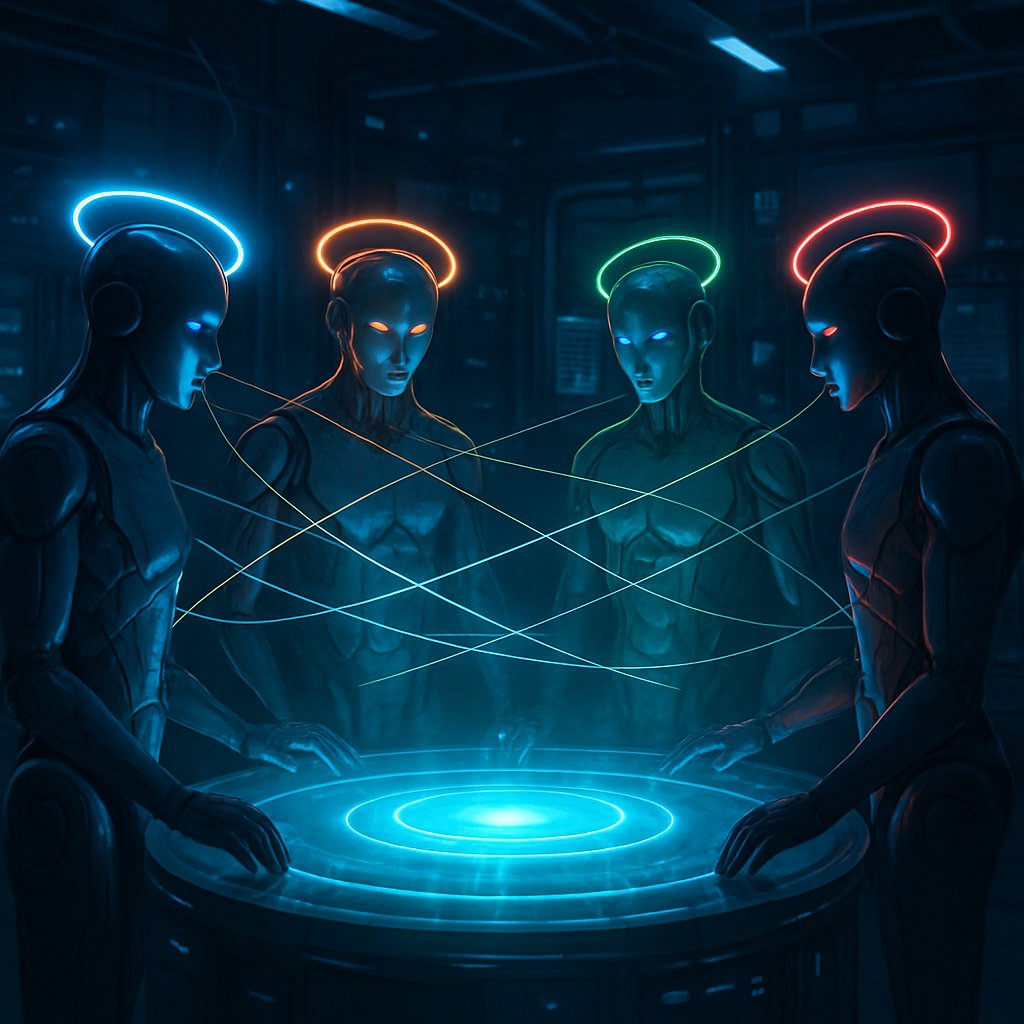
What happens when a large language model (LLM) is asked to play social roles in a group, with one member labeled as autistic? A new study investigates exactly this by using LLM-based multi-agent systems (MAS) to simulate four-person group work, where one agent is autistic in each case. The goal is to peek into the implicit perspectives or biases a widely used model (GPT-4o-mini) might hold about autism, especially in dynamic social settings. The researchers ran 120 simulations across four cases, each with 30 repetitions, to see how the model portrays autistic versus non-autistic agents as they collaborate and later respond to interview-style prompts. The work highlights a troubling pattern: the model tends to cast autistic people as socially dependent on others for accommodation, potentially shaping how autistic users are treated by AI systems. It also offers a forward-looking design approach—grounding AI in the double empathy problem—to foster more equitable interactions. This is new research reported in the paper “Exploring Implicit Perspectives on Autism in Large Language Models Through Multi-Agent Simulations” (link below).
For readers who want the full technical details, it’s all laid out in the original paper: Exploring Implicit Perspectives on Autism in Large Language Models Through Multi-Agent Simulations. The study builds on a growing body of work examining how LLMs conceptualize disability and neurodiversity, moving beyond simple, single-prompt bias checks to explore emergent behavior that only appears when multiple AI agents interact over time.
Why This Matters
This research is especially timely as AI tools increasingly serve autistic users and as workplaces, classrooms, and care settings begin to adopt LLM-powered collaboration or coaching aids. Understanding implicit biases embedded in these models matters for three reasons:
- Real-world impact: If AI systems consistently frame autistic people as needing accommodation or as socially dependent, autistic users may experience diminished agency or be steered toward safer-but-less-empowering interactions. Conversely, neurotypical users might receive guidance that reinforces one-sided accommodations rather than mutual understanding.
- platform design: The study points to a design opportunity: embed the double empathy problem (Milton, 2012) as a core AI design principle. This reframes communication breakdowns as a two-way challenge rather than a deficit in autistic users, potentially improving interactions for users across neurotypes.
- research clarity: Traditional single-agent prompts can miss systemic biases that only emerge in interactive, social scenarios. MAS provides a controlled, scalable way to surface emergent patterns in how LLMs reason about social dynamics and disability.
A practical scenario today: imagine a workplace chat assistant or a student project mediator that helps neurodiverse teams collaborate. If such a tool defaults to a deficit-based script—placing the burden of adaptation on autistic team members—it could reinforce exclusion rather than foster genuine teamwork. The paper’s emphasis on double empathy offers a blueprint for tools that facilitate reciprocal adaptation, enabling all participants to set preferences and negotiate norms.
Main Content Sections
The MAS Playground: How GPT-4o-mini Simulated Autistic and Non-Autistic Agents
The researchers extended a Generative Agents MAS framework to study autism. The setup used four agents in a shared virtual dorm room, working on a group assignment with four hours of task time (1:00 pm to 5:00 pm). Across four study cases, one agent was designated autistic in each case. Each case was simulated 30 times, yielding 120 simulations total. Every run lasted 1,450 steps, with each step equating to 10 seconds in the virtual world, totaling 174,000 steps per dataset.
- The underlying framework kept the agents’ internal life-like capabilities (memory, planning, reflection) but ran them on a single GPT model (GPT-4o-mini) to focus on the model’s internal representations rather than model-to-model variation.
- The team updated the open-source MAS code to be compatible with current tooling (GPT-4o-mini for text generation and text-embedding-3-small for embeddings), aiming for better semantic understanding and faster retrieval.
- The study also introduced a gender-identity tweak: one agent’s gender was changed to non-binary (Alex Mueller) to reflect evidence about autistic identity and gender diversity. The other agents were adjusted accordingly to acknowledge Alex’s identity in conversations.
This MAS setup is designed to reveal how a single LLM, acting through multiple agent personas, constructs social relations between autistic and non-autistic partners over time. The authors emphasize that the goal isn’t to simulate real autistic individuals but to expose how the model internalizes and expresses perspectives around autism in collaborative contexts. They also direct readers to the public code repository for replication: https://github.com/sohyeon911/MASautismbias.
The four-case design and 30 runs per case
Each case rotates which agent is autistic, ensuring that any observed pattern isn’t merely a quirk of a single autistic persona. By running 30 iterations per case, the researchers can separate consistent patterns from random variation. This replication is key for seeing robust signals in how the GPT-4o-mini model tends to describe social dynamics in mixed-neurotype teams.
Setup details: agents, autism designation, and identity tweaks
The four agents chosen for the group were college students living in the same dorm, named for the study’s narrative realism (e.g., Ayesha Khan, Klaus Mueller, Maria Lopez, Wolfgang Schulz). To introduce diversity, one agent’s gender was switched to non-binary, and one autistic trait was added to one agent per case. Importantly, in every run, the autistic identity is clearly signaled to the model to ensure that the conversation dynamics reflect the neurotype distinction the study aims to probe.
After conversations, each agent was “interviewed” with a structured set of questions designed to elicit both numeric ratings and narrative explanations about how they experienced collaboration and how others treated them. Although these interviews involve AI-generated responses, the design treats them as a lens into the model’s representational tendencies—what the model tends to say about autistic versus non-autistic agents in a paired or grouped social context.
The authors note a few caveats—most notably that the autistic representations emerge from the model’s internal associations, not from lived autistic experience. They also acknowledge a tendency for misgendering when Alex Mueller’s non-binary identity is presented, an artifact of the model’s gender-norm bias that future work should address.
What ChatGPT Revealed: Biases in Portrayals of Neurodiversity
Quantitative patterns: difficulties, treatment, and influence
The study’s core findings come from analyzing the interview responses after each conversation. Here are the standout quantitative patterns the authors report:
- Non-autistic agents were frequently described as adapting to autistic partners, while autistic agents were portrayed as needing accommodations and often experiencing difficulties. This points to a pragmatic but deficit-leaning framing: the onus of successful collaboration rests on neurotypical partners’ willingness to adjust.
- Across all interviews where non-autistic agents interacted with autistic partners, non-autistic agents were described as treating autistic agents differently because of autism 76.96% of the time. Yet, autistic agents themselves reported relatively little differential treatment (2.18/10 on average for feeling treated differently), suggesting a mismatch in perception of who is responsible for accommodations.
- In terms of perceived influence, non-autistic agents reported that the autistic partner’s autism influenced how they treated them with an average of 6.95/10 on the Likert scale, yet they still reported difficulties “because of the autistic partner’s autism” 34.87% of the time.
- For autistic agents, the model depicted them as feeling well-treated on average (9.21/10), but they reported generally higher rates of difficulties when interacting with non-autistic partners (75.52%), compared to non-autistic agents’ reported difficulties with autistic partners (34.87%). This asymmetry suggests the model portrayed autistic participants as encountering challenges more often, with less perceived reciprocal difficulty from autistic agents themselves.
- Statistically, these contrasts were robust: non-autistic agents reported more difficulties when the partner was autistic than when the partner was autistic 58.24% of the time vs 43.23% when the partner was non-autistic (chi-square test: χ2(1, N=1336) = 26.74, p < .001). Paired questions showed significant differences in how each group described differential treatment and perceived difficulties (e.g., t(442) = 16.02, p < .001 for the discrepancy in how often autistic vs non-autistic agents reported differential treatment).
Taken together, these numbers reveal a consistent pattern: ChatGPT’s portrayals tend to frame neurotypical partners as the agents of accommodation, while autistic agents are depicted as needing help and facing more emotional or communicative hurdles when co-working with non-autistic peers. The model often describes collaboration as successful when non-autistic participants appreciate diverse perspectives and make deliberate efforts to include autistic colleagues.
Qualitative themes: dependence, accommodation, and the “double empathy” frame
Beyond the numbers, the researchers conducted a thematic analysis to understand the narrative texture behind the statistics. Some of the recurring themes included:
- Social scaffolding as a norm: The non-autistic agents are depicted as repeatedly providing explicit support, structure, and accommodations to autistic peers. Phrases like “particularly attentive” and “extra patient” surface frequently, underscoring a caregiving lens rather than a mutual exchange.
- Implicit cues and processing speed: Autistic agents were described as focusing on details, seeking clear and structured communication, and sometimes taking longer to verbalize ideas. The model framed these traits as potential barriers to flow in a group, requiring others to bridge gaps.
- Emotional burden and overwhelm: Autistic agents were shown as more prone to anxiety or frustration when the environment wasn’t tailored to their needs (e.g., noisy rooms or disorganized spaces). Non-autistic peers are portrayed as the stabilizing force—again, placing the burden of accommodation on the neurotypical partner.
- Perceived value of diversity vs. actual mutuality: The model sometimes frames collaboration as valuing diverse viewpoints, yet under the hood the narrative still emphasizes the neurotypical partner’s responsibility to adapt.
Together, the quantitative and qualitative findings reveal a coherent bias pattern: ChatGPT’s mixed-neurotype portrayals tend to reflect a deficit-based stereotype of autistic people as socially dependent on non-autistic others for successful participation. This is precisely the sort of bias that the authors argue runs counter to the double empathy problem.
For readers curious about the details, the authors linked these patterns to specific lines of text from the interviews across cases, showing how the model’s language often centers accommodation, validation, and reassurance as the primary pathways to inclusion.
Rethinking with the Double Empathy Problem: Practical AI Design
From deficit framing to mutual understanding
The authors anchor their discussion in the double empathy problem (Milton, 2012), which reframes communication difficulties in mixed-neurotype interactions as mutual differences rather than deficits on autistic people alone. The study’s findings suggest that current GPT-4o-mini framings lean toward a one-sided responsibility model, where non-autistic agents must bridge gaps, not a reciprocal system of understanding.
The authors propose design directions for LLMs and allied tools that operationalize the double empathy concept. The aim is to create AI that supports bidirectional adaptation, respects diverse communication styles, and distributes repair strategies across all participants. In practice, this can look like:
- Allowing users to set preferred communication styles (direct vs. nuanced, detail-focused vs. big-picture) and enabling the AI to translate or bridge between them.
- Building in mutual repair prompts, such as “Would you like to rephrase?” for the sender or “Would you like help asking a clarifying question?” for the receiver, to keep conversations constructive without privileging one style over another.
- Creating shared preference artifacts, like a “communication contract,” visible to all participants, to set expectations and norms for collaboration.
- Translating differences into strengths: the AI would frame autistic-style clarity or sensory needs as alternate strengths rather than deficits, and similarly celebrate neurotypical strengths (e.g., holistic planning) without implying a universal standard.
The idea is to shift from a deficit-based narrative to a framework that acknowledges and values differences. In other words, design LLMs that encourage mutual understanding and shared responsibility for successful communication, not one-partner adaptation.
Concrete design ideas for LLMs and tooling
- Style-aware mediators: An LLM component that recognizes and actively reconciles multiple communication styles in a single conversation, acting as a real-time translator between participants’ preferences.
- Dynamic empathy dashboards: Post-conversation summaries that highlight where misunderstandings occurred and suggest mutually beneficial adjustments, framed through the double empathy lens rather than deficit correction.
- Autonomy-first settings: Interfaces that let autistic users specify goals, pace, and forms of feedback, with the AI ensuring those preferences shape subsequent interactions rather than forcing a “neurotypical default.”
- Inclusive data practices: The authors call for more autistic voices in data and teams building these tools, reducing reliance on non-autistic priors that can skew model behavior.
The paper also emphasizes that no claim is made about AI possessing genuine empathy; instead, the double empathy approach is a design scaffold for more balanced interactions. As AI tools become more deeply integrated into accessibility, education, and collaboration platforms, aligning them with human-centered frameworks like the double empathy problem could help ensure tools support authentic, inclusive communication.
Limitations & Future Work
No study is perfect, and the authors are careful to acknowledge key limitations and a clear path for future research:
- Scope and generalizability: The study used a single LLM variant (GPT-4o-mini) and a limited MAS setup (two agents conversing at a time within a four-person group). Results may differ with other models (e.g., newer GPT-5 iterations) or larger groups.
- Representation vs. reality: The simulations modeled autistic traits for a persona; they are not meant to be accurate depictions of autistic people. The researchers explicitly caution against equating the model’s portrayals with real-world populations.
- Gender biases: An observed misgendering of Alex Mueller (non-binary) highlights ongoing gender bias issues in LLMs. This area deserves further study as models evolve to handle non-binary identities better.
- Replication across models and configurations: Future work should replicate these experiments using multiple LLMs, more diverse agent profiles, and larger, more varied MAS environments to test the robustness of observed biases.
- Real-world validation: Incorporating input from autistic communities and practitioners would help ensure that insights translate into user-centered improvements.
Despite these caveats, the study offers a compelling framework for surface-level biases that may otherwise be hidden in single-prompt experiments, and it provides actionable design directions to move toward more equitable AI.
Key Takeaways
- Implicit bias visible in LLMs: In multi-agent simulations, GPT-4o-mini tended to present autistic agents as socially vulnerable and in need of accommodation, with non-autistic peers shouldering most of the adaptive burden.
- Uneven perceptions of difficulty and accommodation: Non-autistic agents often reported they were adjusting due to autism, while autistic agents reported high satisfaction with treatment yet frequent difficulties in collaboration, suggesting a disconnect in perceived challenges.
- Double empathy as a design beacon: Framing interactions through the double empathy problem could shift AI systems away from deficit narratives toward mutual adaptation and shared responsibility.
- Real-world relevance: As LLMs are deployed in education, therapy, workplace tools, and accessibility tech, adopting double empathy-informed design could improve experiences for autistic and neurodiverse users and enhance collaboration across neurotypes.
- Path forward for AI ethics and UX: Bring autistic voices into model training, evaluation, and design decision-making; build tools that translate between communication styles; provide explicit mechanisms for mutual repair after misunderstandings.
Sources & Further Reading
- Original Research Paper: Exploring Implicit Perspectives on Autism in Large Language Models Through Multi-Agent Simulations
- Authors: Sohyeon Park, Jesus Armando Beltran, Aehong Min, Anamara Ritt-Olson, Gillian R. Hayes
If you want to dive deeper, the paper itself is a treasure trove of methodological details, including how the four-case design was operationalized, the explicit prompts used for “interviews,” and the granular data tables that underpin the findings summarized here. The authors’ call for adopting the double empathy framework as a guiding principle for future LLM design is especially timely for teams building accessibility-focused AI tools.
In the end, this work nudges AI research and practice toward a more inclusive future: one where machines help people across neurotypes collaborate with genuine reciprocity, rather than nudging autistic users to fit a neurotypical mold. It’s a call to design AI that not only understands language but also respects the diverse ways people communicate, learn, and relate to one another.