The Short Answer
Online health communities often “catch the patient, not the AI”: they focus on the person’s medical intent and emotional state rather than treating the chatbot output as the main issue. In the lymphoma community study, AI was typically a background factor that shaped what patients brought to the group.
For practitioners and community members, the takeaway is to redirect conversations toward practical next steps—grounding discussion in the underlying report and advising what to do next—rather than debating whether the AI is “right.”
A key caveat is that measuring AI impact only at the moment of the chatbot misses what happens afterward; the meaningful outcome is whether the community helps the person regain control of meaning and decisions.
On this page
- Introduction
- Why This Matters
- How AI Entered the Lymphoma Forum Ecosystem (and When It Spiked)
- What Members Used AI For: More Than Facts, More Than “Second Opinions”
- The Core Finding: The Community Leaves AI Unaddressed Most of the Time
- Why People Avoid Auditing AI: Three “Gotchas” That Create Silence
- What This Means for AI Design and Community Norms (Design for “downstream sensemaking”)
- Key Takeaways
Patient-first AI support works—community “catches the person,” not the bot
Introduction
If you’ve ever watched a health forum thread unfold—someone panicking after an AI chatbot “interprets” their results, then others stepping in with reassurance—you already know there’s a social layer to AI use. What’s easy to miss, though, is what happens after the AI output lands inside the community. The big question is: does the group treat the AI like the star of the show, or do they mostly treat it like background noise that shaped the person’s situation?
New research from Feng He, based on the arXiv preprint “Catch the Patient, Not the AI: Collective Sensemaking in an Online Health Community”, digs into exactly that. Using a mixed-methods study of House086, China’s largest lymphoma patient and caregiver community, the research tracks how AI-related conversations actually take shape from 2014–2026—especially after the public release of ChatGPT (late 2022) and later DeepSeek (early 2025). The headline finding is surprisingly human: in most cases, the community catches the patient, not the AI.
Why This Matters
This is significant right now because people are increasingly using AI before they ever reach a clinician or even a peer group. In other words, by the time someone posts to a forum, their fear, confusion, and confidence may already be “trained” by an AI answer. If we only evaluate AI at the moment of the chatbot interaction, we’ll miss the real story: whether the community can help someone regain control of meaning and next steps.
A scenario you could apply today: imagine a patient uploads a lab report to an AI tool and gets an alarming interpretation. They come to an online support group asking for verification. What this research suggests is that the most helpful community response often isn’t a debate about whether the AI was correct. Instead, the community zooms in on the person’s emotional state and medical intent—checking the underlying report, sharing lived experience, and helping the person form a practical plan (“wait for pathology,” “talk to your specialist,” “don’t spiral”). That’s collective sensemaking doing what it has always done, just with AI as a silent upstream factor.
This builds on earlier AI-in-health research that focused more on standalone quality (how good are the answers?) or individual use (how do people respond to a chatbot?). He’s work adds a needed social angle: AI doesn’t just produce text—it reshapes what people bring back into peer spaces. The community’s job shifts from “auditing AI” to “recalibrating the person.”
How AI Entered the Lymphoma Forum Ecosystem (and When It Spiked)
The study analyzed publicly accessible threads from House086 (Lymphoma Home), spanning March 2014 to May 2026. To find AI-related discussions, the researcher used keyword searches (including generic terms like “AI”/“artificial intelligence” plus named tools like ChatGPT, DeepSeek, Doubao, Qwen, etc.), then manually screened what looked relevant.
A key pattern: AI-related posts were negligible for most of the decade, then surged. The paper reports two change points that line up with major public AI releases:
- ChatGPT era: after late 2022, posting rose to about 1.6 threads per month (total 39 threads from Dec 2022–Dec 2024).
- DeepSeek era: after early 2025, posting rose to more than 17 threads per month (total 298 threads after Jan 2025).
After cleaning and exclusions, the analytic sample became 337 post-ChatGPT records. (The study excluded 14 pre-ChatGPT general AI threads to avoid mixing time periods with very different AI tools.)
What’s interesting isn’t only the volume; it’s the “meaning of AI” changing over time. Before ChatGPT, “AI” references were rarer and often pointed to more specialized uses (like imaging AI). In the ChatGPT era, most AI talk was about conversational tools and also the forum’s own AI bot. In the DeepSeek era, named tools became more diverse.
Who brought AI into threads—and how did they feel about it?
In the 337 threads (post-ChatGPT eras), AI was introduced most often by:
- Patients: 187 threads (55.5%)
- Caregivers: 118 threads (35.0%)
- Community authorities: 32 threads (9.5%)
And the emotional/attitudinal experience was mostly favorable:
- Favorable: 210 (62.3%)
- Overwhelmed: 57 (16.9%)
- Neutral: 50 (14.8%)
- Unfavorable: 20 (5.9%)
But there’s a nuance: overwhelmed feelings weren’t rare overall. For patients and caregivers, those percentages were meaningful—especially caregivers, who were more likely than authorities to report being overwhelmed by AI output.
What Members Used AI For: More Than Facts, More Than “Second Opinions”
One of the most revealing parts of this paper is that AI use wasn’t limited to “tell me what this lab test means.” The researcher coded AI use into functional categories (information support, second opinion, psychosocial support), and allowed overlap (because a single thread could include multiple uses).
Across the sample:
- Information support: 280 (83.1%)
- Second opinion use: 76 (22.6%)
- Psychosocial support: 31 (9.2%
- Other uses: 16 (4.7%)
So yes, information needs dominated—but the forum also saw AI operating like a stand-in for emotional and social support.
A useful analogy: AI as an “upstream spark”
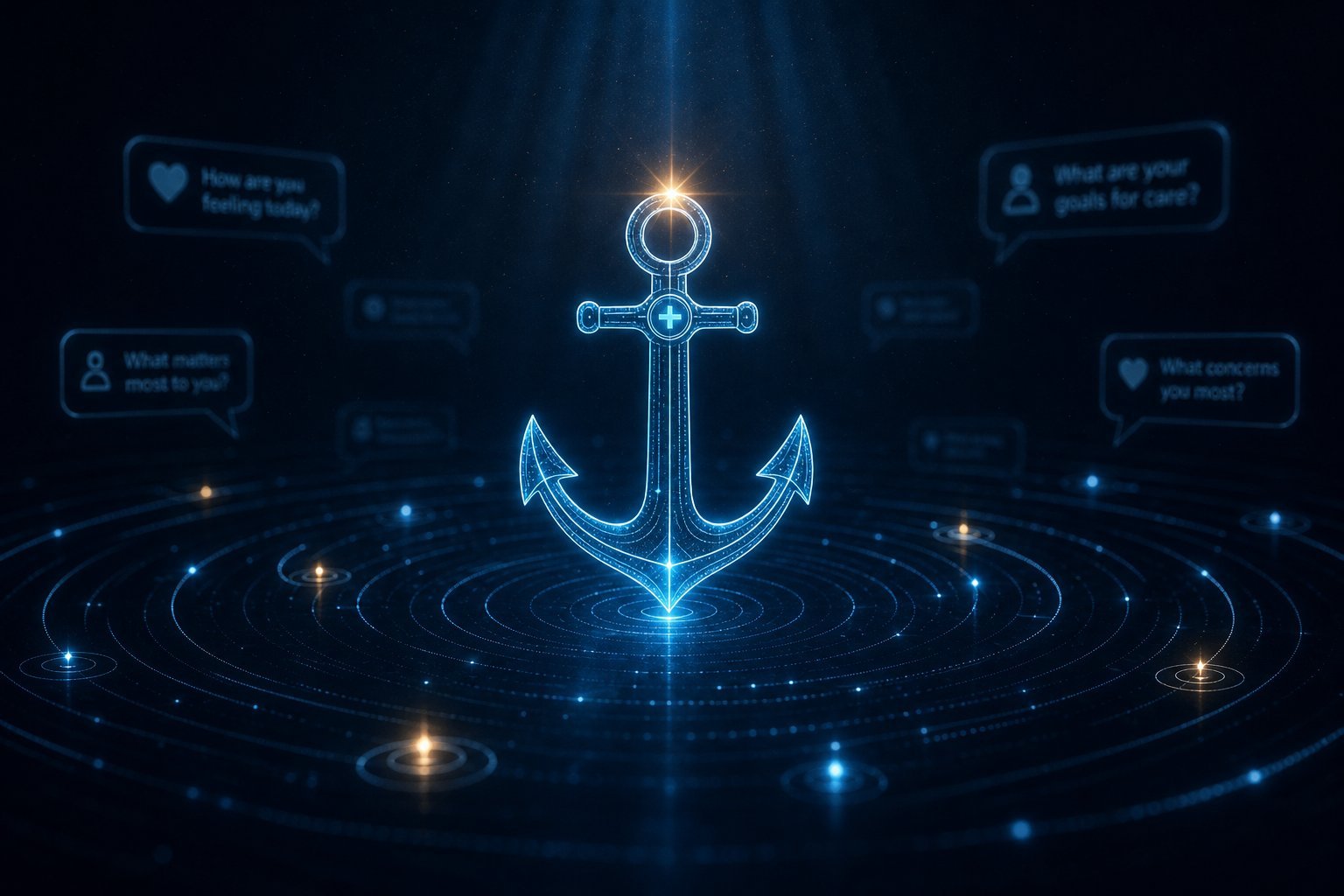
Think of the community like a ship’s lifeboat crew. In the old world, the crew might respond to a distress signal directly from the patient (“I don’t understand my report”). In this AI-enabled world, the distress signal can be “lit” upstream by the chatbot—meaning the person arrives to the community already emotionally primed, sometimes panicked, sometimes overconfident, sometimes flooded with competing interpretations.
That’s why informational uses could still lead to emotional blowback. The paper reports that feeling overwhelmed was most common in:
- Second opinion threads (22.4% overwhelmed within that use category)
- Information support threads (19.3%)
Psychosocial support uses rarely involved overwhelm (3.2%).
The forum’s response mechanism: it often answers the person’s intent, not the AI tool
The study also coded the community’s uptake of the initiator’s intent (yes/partial/no). Uptake was high when the initiator’s goal was emotional or integrative:
- Seeking psychosocial support: only 2.5% no uptake
- Seeking triangulation: only 6.6% no uptake
- Seeking information: 5.3% no uptake
But AI-recommendation and “share information” posts were easier to ignore:
- Share information: 24.3% no uptake
- Recommend AI tool: 44.3% no uptake
That suggests a real-world norm: the community cared most about the life problem the AI-triggered questions represented—not whether the AI itself deserved applause.
The Core Finding: The Community Leaves AI Unaddressed Most of the Time
Here’s the central claim from the paper: the community does collective sensemaking around the patient’s situation, but it often doesn’t audit the AI dimension.
In fact, the most common “stance toward AI” was simply:
- Not addressed—meaning responders didn’t meaningfully comment on the AI itself.
Across the 337 threads, AI was not addressed in 73.3% of cases.
And the pattern holds even when the initiator’s AI experience was favorable, unfavorable, or overwhelmed:
- Not addressed was the majority stance in every experience group, including:
- 66.7% of overwhelmed threads
- 84.0% of neutral threads
- Even with explicitly triangulation-seeking posts: 71.1% still not addressed.
What does it look like in practice?
The paper gives examples that make this feel less abstract.
Overwhelmed by AI’s alarming interpretation
A patient/caregiver uploads a report after a chatbot gave frightening output. Community members help by:- checking the underlying report (screenshots, numbers)
- sharing “we’ve been through this too” experience
- reframing next steps (“wait for pathology,” “talk to a specialist”)
But only briefly does someone suggest the AI might have misread. After that, the thread moves on.
Conflict between AI and clinicians
In one case, community experienced members didn’t “pick a winner.” Instead, they clarified distinctions between treatment forms and helped make the disagreement actionable. The clinician’s authority and AI’s suggestion both became pieces in a bigger decision puzzle—yet the AI didn’t become the object of deep verification.When members do mention AI
When AI was discussed, it was more often with caution than endorsement. Direct rejection happened rarely, typically when a claim carried concrete risk and could be externally checked.
Why People Avoid Auditing AI: Three “Gotchas” That Create Silence
The most important implication of “AI is not addressed” is what it enables—or fails to prevent. The paper identifies scenarios where community silence happens for different reasons, and each has a real risk.
1) Strategic concealment: “Don’t let the doctor know”
Some members use AI to reduce burdens on clinicians (“you wouldn’t have to ask around”). Yet patients also warn each other not to confront clinicians with AI output directly—because it could undermine the patient–provider relationship.
So even when community members privately rely on AI, they may encourage a framing like:
- treat AI as reference opinions
- don’t use AI answers to “fight” the doctor
This creates a weird double life for AI: it affects decisions and anxiety, but it stays “off the record” socially.
2) Lay knowledge brokerage: polished summaries without checkable sources
AI makes synthesis cheap and fast. Some members post long, authoritative-looking summaries of trials and drug developments without traceable citations.
The community response tends to bypass the visible AI-flavored package and focus instead on the disease-related claim. That means:
- AI’s credibility doesn’t get audited in a systematic way
- the community’s usual “who is speaking and where their knowledge comes from” checks may not trigger
The paper even describes a separate promotional cluster (excluded from analysis) where templated posts inflated AI tool mentions—showing how easily “AI-authority” can be mimicked. That’s the blunt version of the same problem.
3) Convenient misattribution: blame/relief pinned onto AI, without real checking
This is a subtle but powerful mechanism. If the community believes the AI misread a report, the patient might feel immediate relief—and the thread might stop checking the underlying data.
The paper recounts an opening vignette where a respondent suggested AI misread a dangerously low lab value. But when the report image was later inspected, the lab value itself looked abnormal enough to warrant concern—meaning the “AI error” explanation may have been convenient rather than verified.
So AI can become a placeholder explanation:
- “AI must be wrong” when the numbers scare people
- “AI must be right” when AI aligns with what the community needs to hear
And either way, the AI doesn’t become an object of careful collective evaluation.
What This Means for AI Design and Community Norms (Design for “downstream sensemaking”)
This research argues that evaluating patient-facing AI only at the moment of generation misses the real downstream consequences. In this forum, AI didn’t replace community sensemaking—but it shifted where sensemaking happens.
Instead of:
- community auditing AI accuracy
…it more often becomes:
- community helping interpret the person whose question and emotional state were shaped by AI
A short comparison table: what “matters” when AI enters a community
| Evaluation focus | What it assumes | What this study shows happens instead |
|---|---|---|
| AI correctness / auditing | If AI is right, the community can move on | The community often doesn’t audit the AI dimension at all (AI not addressed in 73.3% of threads) |
| Patient intent + sensemaking | If responders support the person’s needs, uncertainty can be managed | Uptake is often high for emotional and triangulation goals, even when AI itself goes unexamined |
| Provenance + credibility | If sources are checkable, the group can validate claims | Without traceable citations, AI “expert polish” may bypass credibility norms, especially in lay knowledge brokerage |
Practical design implications you can use now
If you’re building AI tools for health (or building the UI around them), this paper implies a few design directions:
Assume AI output will travel into peer spaces
In reality, users paste, screenshot, or paraphrase AI answers into forums. So design should support safe context transfer (not just “here’s the answer”).Make provenance and “role of AI” visible
Communities here struggled with detecting and properly crediting AI-generated synthesis. If AI tools can help users label what’s AI-assisted vs human-checked, it may reduce strategic concealment and misattribution.Be sensitive to emotional state
The forum showed medically plausible but blunt outputs could intensify distress (“overwhelmed” cases mattered). Even a correct factual answer can be psychologically unusable if it lands without the right emotional pacing or next-step framing.
A direct tie-back to the paper’s argument
He’s paper frames this as: the community catches the patient even when it does not catch the AI, and interpretive authority doesn’t settle in a single place. Instead, it gets assembled across multiple sources (clinician advice, peer experience, AI explanation, sometimes literature references).
That’s a design challenge: supporting the multi-source coordination work that patients already do—whether or not AI is visible.
Key Takeaways
- AI became common in House086 after major releases: posting rose sharply after
ChatGPT(late 2022) and surged again afterDeepSeek(early 2025). - In 337 post-
ChatGPTthreads, most AI use was information support (83.1%), with second opinion (22.6%) and psychosocial support (9.2%) also present. - The community often responds to the person’s intent, not the AI dimension: AI was not addressed in 73.3% of threads.
- Even in threads seeking triangulation, the community still bypassed the AI dimension most of the time (71.1% not addressed).
- When AI was discussed, responses were generally cautious rather than endorsing, and direct rejection was uncommon.
- Three mechanisms help explain the silence:
- strategic concealment (don’t confront clinicians with AI)
- lay knowledge brokerage (polished AI summaries without checkable sources)
- convenient misattribution (blame/relief pinned on AI without verifying)
- For AI design, the big shift is this: don’t treat AI evaluation as a one-time interaction. Build for “downstream sensemaking” where outputs move into peer communities.
If you want, I can also turn this into a practical checklist for community moderators or a set of UI suggestions for patient-facing AI (e.g., what prompts to use before users share AI-generated content on forums).
Sources Used
This article is a plain-English breakdown of the following peer-reviewed preprint. Read the original for full methodology and results:
- Catch the Patient, Not the AI: Collective Sensemaking in an Online Health Community — arXiv
- Authors: Authors: Feng He